

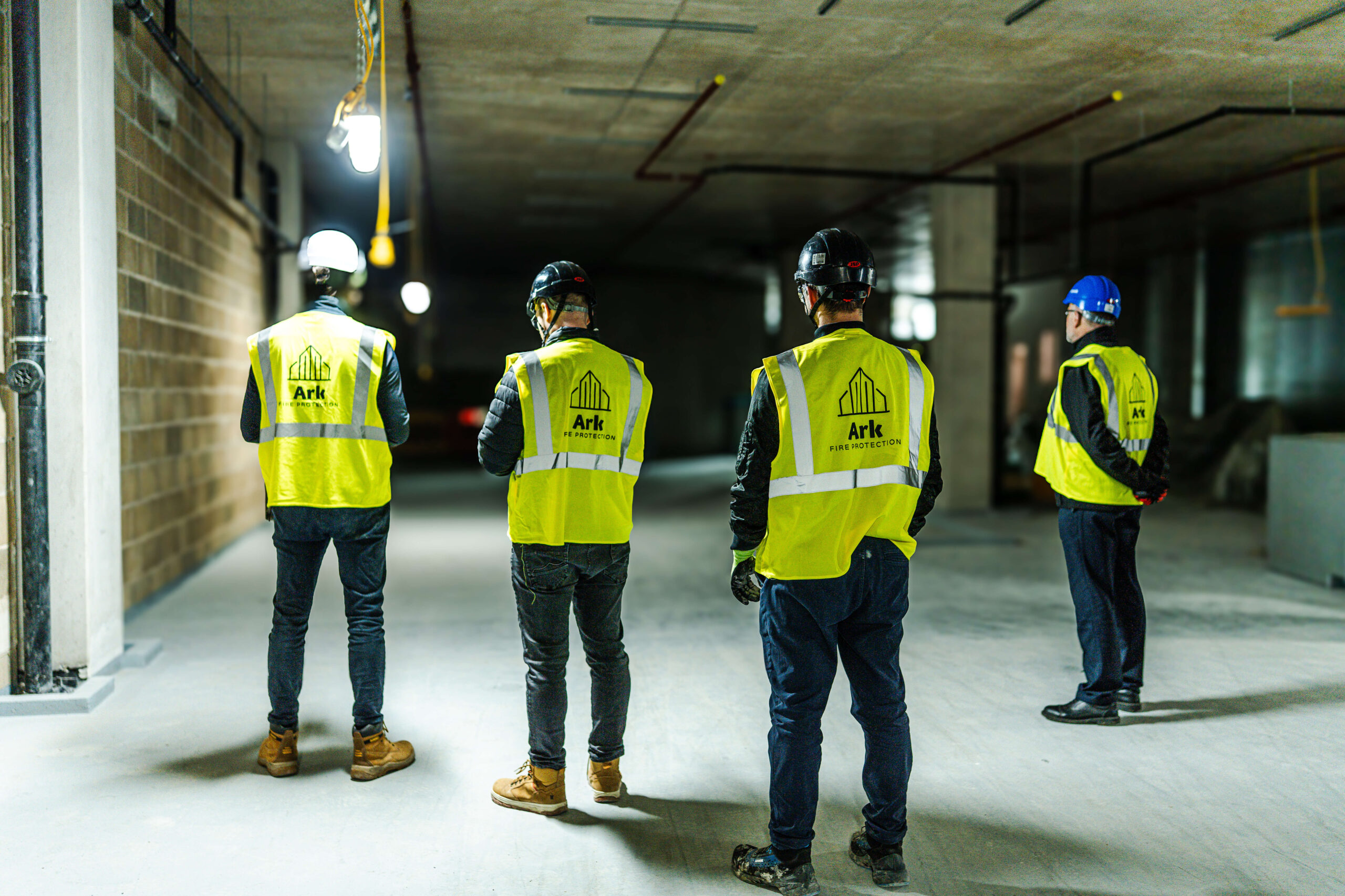















Ark logo on the back of 4 high vis jackets.

Fire Alarm Installation Services

When a fire alarm activates and the panel does its job, that is the easy part. The hard part lands months later, when an inspector, an insurer or the Building Safety Regulator asks you to prove the system was designed to the right category, installed by a competent engineer, and serviced on schedule.


For a Head of Building Safety or Compliance Lead running detection across dozens of blocks, the real risk is not the hardware failing. It is an evidence trail that falls over the moment it is scrutinised. That is where most detection estates are quietly exposed.

citation approved certificate
Constructionline Gold Certification
Firas certification
Ark ISO 9001 - British Assessment Bureau Certificate
CHAS cert exp
Acclaim certification logo
British Assessment Bureau Certificate
SafeContractor Certificate
facilities line gold member logo
ASFP Logo
fire door

Nationwide Fire Alarm System Installers for Public Sector and Housing Associations

Ark Fire Protection provides nationwide fire alarm installation and maintenance for housing associations, local authorities and FRAs.


We understand public sector compliance requirements, procurement frameworks and structured reporting processes. Our engineers regularly work across large residential blocks, sheltered schemes and multi site housing portfolios, delivering projects within occupied buildings with minimal disruption. We support long term safety strategies, ensuring systems remain compliant, certified and audit ready across entire property portfolios.

image w text bg Ark Fire Protection Logo on high vis.

Types of Fire Alarm Systems We Install and Maintain

We install and maintain fire alarm systems in accordance with BS 5839, including Categories L1 to L5 and M, based on the building risk profile and evacuation strategy.


Conventional systems operate on a zone basis and are typically suited to smaller or lower risk buildings. Addressable systems allocate a unique address to each device, allowing precise identification of fire or fault locations, making them ideal for large residential blocks and complex public buildings. Wireless systems are used where cabling is impractical, particularly in occupied or heritage buildings where disruption must be limited. Our service covers system design, installation, commissioning, certification and ongoing maintenance to ensure continued compliance and performance.

image w text bg Ark Fire Protection Jacket & High Vis.

Why Choose Ark Fire Protection for Fire Alarm Systems

Our qualified engineers work to UK legislation and British Standards, providing clear reporting and certification to support audits and regulatory requirements. We understand the demands of public sector environments and integrate fire alarm systems with passive fire protection works, AOV systems and emergency lighting to deliver a complete and coordinated life safety solution.

Get in touch

Fire Alarm Brands We Install & Maintain

Fire alarms we supply for new installations:


Advanced Mx Pro5, Ctec, Kentec.


Fire alarm panels we can service and maintain in existing systems:


Advanced, Gent, Protec, Ctec, Kentec, Minerva, Coopers, Eaton, Fike, Hayes, Hyfire, EDA, Morley, Apollo, Hochiki.

image w text bg Ark Team training session

Our 12 Month Fire Alarm Parts and Labour Warranty and Service Package

All newly installed systems include a 12 month parts and labour warranty, providing assurance of quality and accountability. We deliver structured preventative maintenance through quarterly visits, with devices inspected and functionally tested at each visit to ensure full annual coverage. An annual full system service is also completed, including comprehensive inspection and testing of all devices and control equipment. During the warranty period, emergency call out cover is provided with rapid engineer response to faults or system issues, ensuring continued compliance and system reliability.

image w text bg Ark logo on the back of 3 high vis jackets.

Fire Alarm Services As Part of a Wider Safety System

Our fire alarm systems sit at the heart of an integrated life-safety setup. We install them alongside emergency lighting so escape routes stay visible the moment of activation, automatic opening vents that open on detection to clear smoke from stairwells, and disabled refuge communication points to support mobility-impaired occupants. We also integrate fire alarms with warden call systems in sheltered and supported housing, and link them into access control so fire-rated doors release automatically during an evacuation.

image w text bg

Fire Alarm Regulations: What the Law Now Requires

Under the Regulatory Reform (Fire Safety) Order 2005, the Responsible Person has a legal duty to provide appropriate fire detection and warning. “Appropriate” is defined by the building, its use and its people, not by what happens to already be installed.


The governing standard changed in 2025. BS 5839-1:2025 took effect on 30 April 2025 and replaced the 2017 edition. The headline changes matter: certain deviations are now explicitly prohibited following fatal fires, heat detectors are no longer permitted in sleeping areas under Category L2, there is new guidance on detector “shadow spots” caused by beams and ductwork, and a new section sets out how extensions and modifications must be handled.


  •     Regulatory Reform (Fire Safety) Order 2005 – the duty to provide and maintain appropriate detection.
  •     BS 5839-1:2025 – design, installation, commissioning and maintenance; correct category (L1–L5, M, P) for the building.
  •     Fire Safety (England) Regulations 2022 – fault reporting, resident information and access requirements in buildings over 11m.
  •     Building Safety Act 2022 – the golden thread of fire-safety information for higher-risk buildings.
  •     BS 8629 – evacuation alert systems for fire and rescue services, recommended in new blocks of flats over 18m, and separate from the detection system.


A compliant system is one you can certify: a design certificate that states the category, a commissioning certificate, and a clean record of every variation since.

image w text bg 3 members of the Ark team on site wearing branded high-vis jackets.

From “Installed” to “Evidenced”: De-Risking Your Detection Estate

Most portfolios carry detection inherited from several contractors over many years. The pattern is familiar: no design certificate, an unknown or unverifiable category, servicing that has quietly lapsed, and paper records that cannot be produced on the day they are asked for. Every one of those gaps is a potential breach of the Fire Safety Order and the Fire Safety (England) Regulations, an insurer dispute waiting to happen, and direct exposure to the Regulator of Social Housing or the Building Safety Regulator.


We treat the evidence pack as the deliverable, not an afterthought. We design to the correct BS 5839-1 category for the building and the people inside it, install with competent engineers, and issue full design and commissioning certificates. Every panel, device and service visit is captured digitally through Onetrace, so the proof exists in real time. And because we deliver detection alongside passive fire protection and the wider life-safety stack, one accountable contractor owns the whole picture, not a slice of it.

image w text bg Ark & Quelfire's collaboration

Our Accreditations

When it comes to the safety of your premises, you need a company that you can rely on. Ark Fire Protection is proud to be accredited by the leading industry bodies – ensuring that we always meet the highest standards of quality and safety, and that our customers can always expect a first-class service.


We’re also ISO 9001 certified, meaning that our quality management systems are regularly audited and approved. So when you choose Ark Fire Protection, you can be confident that you’re making the best possible decision for your property.

Great projects start with great technology

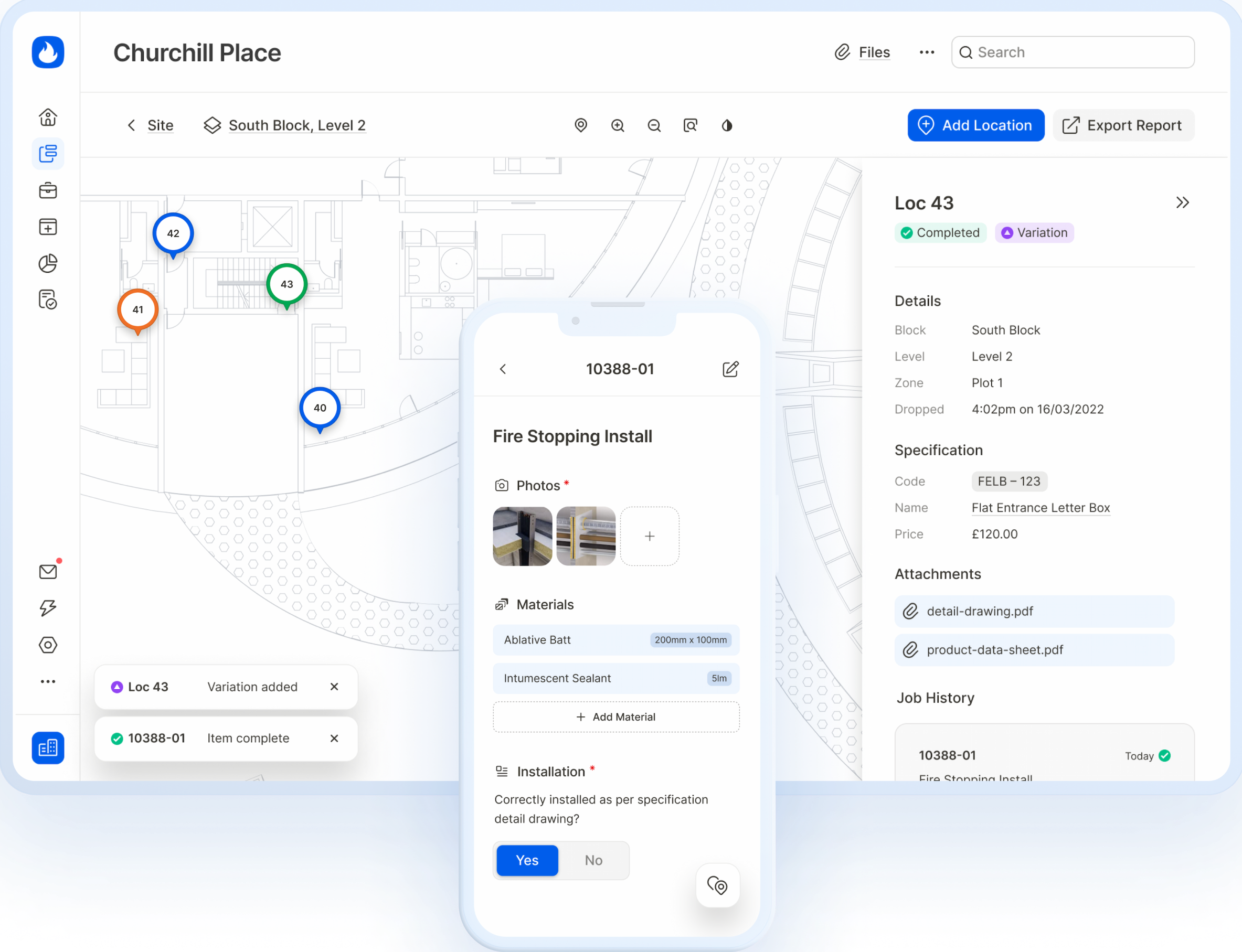
Here at Ark Fire Protection, we use a QR Code System to create a journey of your fire alarm to provide a digital log via the Onetrace App. The log covers the entire lifespan of your new fire alarm including information such as specifications, data sheets, images of work completed, the installer and what was installed.


Our QR Code System gives our clients visibility on the complete lifespan of the fire alarm and helps you keep on top of what work has been completed and what is required to keep up to date with the latest regulations and requirements.

Working With Leading Manufacturers

Fire Alarm Frequently Asked Questions

1. What category of fire alarm system do we legally need?

There is no single answer: it is driven by your fire risk assessment, the building type and how it is used, then specified against BS 5839-1 (categories range from L1 for the highest life protection down to M for manual-only). We assess the building and recommend the category that meets your duty without over-specifying.

2. What changed in BS 5839-1:2025, and do our existing systems need upgrading?

The 2025 edition took effect on 30 April 2025. It is not retrospective (compliant existing systems do not automatically need replacing), but any new system, extension or modification must meet it, and some former “acceptable deviations” are now prohibited. We review existing systems against the new clauses and flag anything that needs attention.

3. Who is legally responsible for the fire alarm in a block of flats?

The Responsible Person under the Fire Safety Order (usually the building owner, freeholder or managing agent) is responsible for the common parts. In higher-risk buildings the Accountable Person under the Building Safety Act also carries duties. We provide the documentation both roles need to demonstrate compliance.

4. How often does a fire alarm system have to be serviced?

BS 5839-1 recommends servicing at least every six months by a competent person, plus a weekly user test and routine in-house checks. We set and hold a planned schedule across your whole portfolio and log every visit digitally.

5. Do new high-rise residential blocks need an evacuation alert system?

New blocks of flats over 18m should be fitted with an evacuation alert system to BS 8629, for use by the fire and rescue service. It is a distinct system from the fire detection and alarm; we advise on where it applies and design the two to work together.