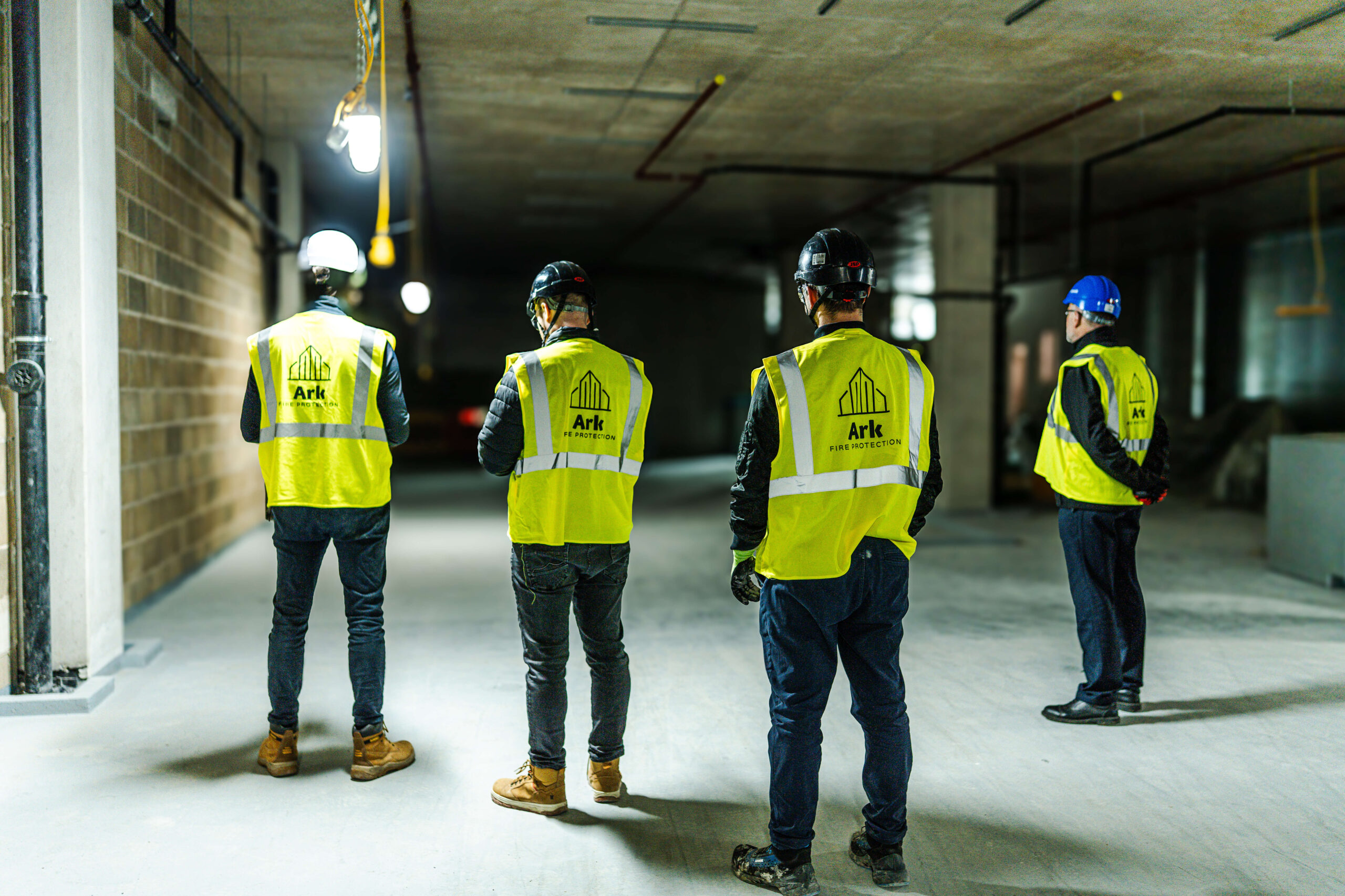
Ark logo on the back of 4 high vis jackets.

Intumescent Painting Contractors

Intumescent coatings are structural fire protection – the difference between a steel frame that holds for its required fire-resistance period and one that softens and fails. They’re the passive fire service where proof matters most. Anyone with a spray rig can coat steel; far fewer can show that the right thickness went onto the right section. And without that proof, the protection is unverified.


Ark applies and evidences intumescent and cementitious coatings at project scale. Wet and dry film thickness testing as standard, condition logging at every stage, batch traceability to the manufacturer, and documented touch-up after follow-on trades.

citation approved certificate
Constructionline Gold Certification
Firas certification
Ark ISO 9001 - British Assessment Bureau Certificate
CHAS cert exp
Acclaim certification logo
British Assessment Bureau Certificate
SafeContractor Certificate
facilities line gold member logo
ASFP Logo

    Intumescent coating is a proof problem, not just an application problem

    Structural fire protection comes down to one number per member: the dry film thickness applied to that section. Each steel element needs a thickness reading, a product batch, an application-condition log and a record tying it to a tested system for its section factor and required fire-resistance period. Get the application right but lose the record, and the protection exists on the steel but not on paper – and a structural fire-protection record that can’t prove the applied thickness is exactly the kind of gap that stalls a Gateway submission or forces a re-coat after a later design change.


    That’s why Ark treats the evidence as part of the deliverable. Every section is measured and logged, so the protection can be demonstrated to a building control body, a Principal Contractor at Gateway, or a structural engineer revisiting the frame years later.

    image w text bg

    What happens when intumescent reporting or QA goes wrong

    If the record can’t prove the thickness


    Structural fire protection lives or dies on the dry film thickness applied to each section. If the record can’t prove the right thickness went onto the right steel for the required period, the protection is unverified – however good the spraying was. Unverified protection gets rejected at review and reopened after any structural change, which can mean re-testing or re-coating a frame that’s already clad, serviced and fitted out.


    If there’s no QA on site


    Coatings get applied in the wrong temperature or humidity, thicknesses are estimated rather than measured, substrate preparation is skipped, and knocks from follow-on trades are left un-touched-up. The coating looks finished and isn’t. It only has to fail once – in the one event it exists to survive.


    How Ark proves the protection


    Wet film and dry film thickness testing as standard, condition logging at every stage, holiday detection, batch traceability back to the manufacturer, and documented touch-up after follow-on trades. Every section’s protection is measured and recorded, mapping straight to the structural fire-protection evidence the building needs.

    image w text bg Business towers and Green leaves, London

    Built for project scale

    Intumescent coating is a mobilisation-and-plant operation – blasting, priming, spray plant, access and environmental control. That makes it an economic fit for project-scale work, not one-off beams. Ark targets packages where structural steel is exposed and needs certified protection:


    • Commercial offices and mixed-use schemes with exposed steel frames.
    • Logistics sheds and industrial buildings.
    • Large residential developments with exposed structural steel.
    • Steel-frame new builds for Tier 1 main contractors and steel-frame contractors.
    • Remediation of existing or damaged coatings for FM providers and asset owners.


    Applied by hand or by spray with leading plant for a consistent, certified finish – on steel and timber, internally and externally, with cementitious systems where the specification calls for them.

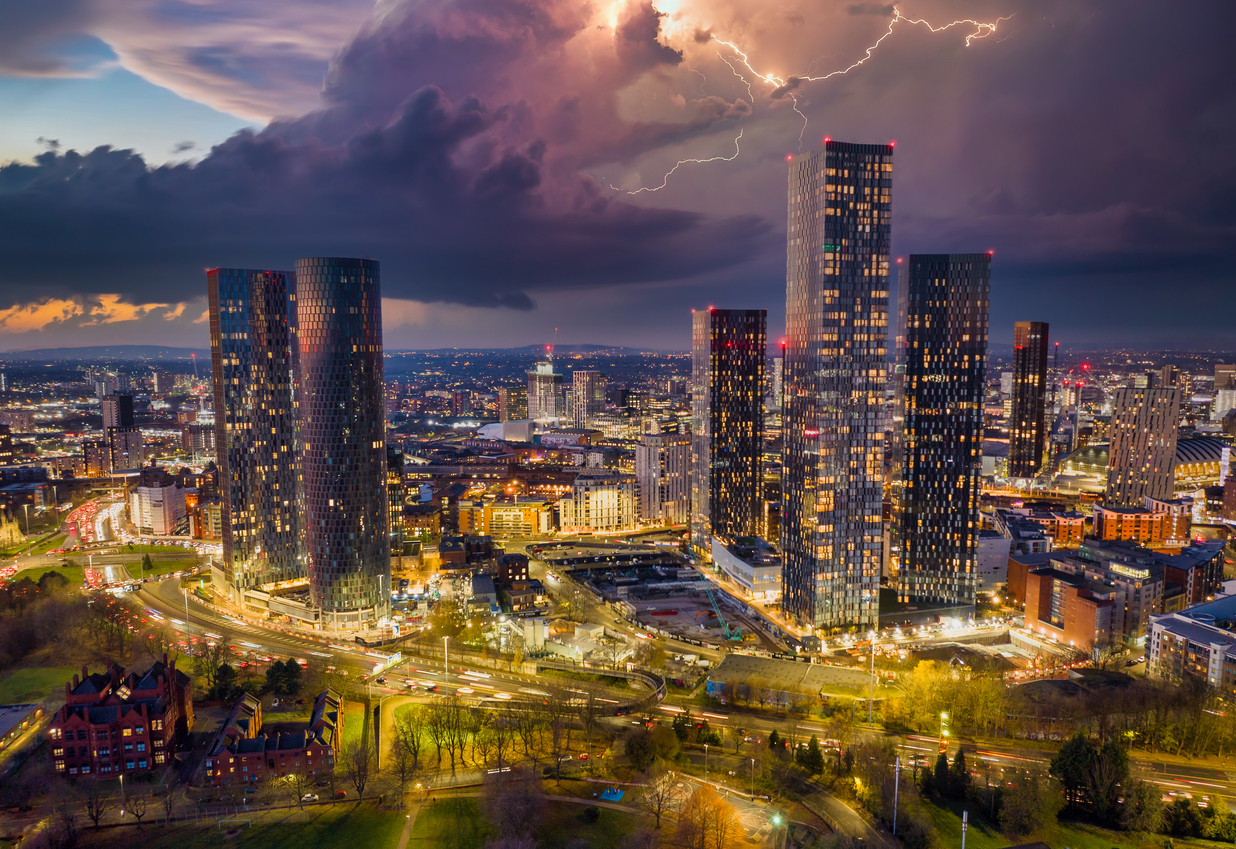
    image w text bg Manchester at dusk and lighting bolt over the skyline

    Structural fire protection we've delivered

    • Manchester Fire Station – structural frame protection in a significant blue-light new build.
    • The Oval Village – exposed steel requiring intumescent protection on a major London residential scheme.
    • St William Clarendon Road – structural steel protection within a 1,714-unit mixed-use development.
    image w text bg

    Spray Fireproofing Contractors

    Ark Fire Protection is a leading intumescent spray fireproofing contractor. We have many years of experience in the fire protection industry and have projects underway across the UK. We offer a comprehensive service which includes an initial survey, specification and design advice, supply and installation of products, and on-going maintenance. Our team of fully qualified and experienced staff are dedicated to providing a high quality service that meets the needs of our clients.


    Our aim is to provide a comprehensive intumescent spray solutions that meets the needs of our clients. In order to do this, we work closely with our clients to ensure that their specific requirements are met. We also offer a free, no-obligation quotation service so that you can be sure you are getting the best possible price for your fire protection needs. Contact a member of our team today to find out more about our services and how we can help you.

    image w text bg Ark Fire Protection Jacket & High Vis.

    Intumescent Paint for Structural Steel

    Ark Fire Protection are one of the specialists in fire protection services with one core focus – ensuring the protection of structural elements within a building. Intumescent coatings are used in conjunction with other fire protection elements to achieve Passive Fire Protection.


    Ark Fire Protection can apply Intumescent Coatings to structural steel to ensure they are capable of withstanding high temperatures and ensure the structural stability of the building.

    image w text bg Ark logo on the back of 3 high vis jackets.

    Intumescent Coatings for Fire Protection

    Intumescent coatings for structural steels are a proven and effective method of protecting buildings from the risk of structural damage. All of the intumescent coatings used by Ark Fire Protection have been rigorously tested, meeting EU standards, giving confidence to our customers of advanced protection from fires which may cause threats to the structural elements of buildings.


    Intumescent coatings, often referred to as reactive paint, reacts with the heat caused from a fire, specifically temperatures exceeding 120°C. When exposed to temperatures above this threshold, the paint will intumesce (swell) up to 50 times the thickness of the original paint forming a proactive, carbon layer which thermally insulates the steel for a set period of time. Depending on the coating, this is usually in the range of 30 – 120 minutes. This period allows people to be safely evacuated from the building and protects the very structure of a building before firefighters can extinguish the blaze.

    image w text bg Ark logo on high vis.

    Intumescent Paint Contractors Near Me

    Nationwide Intumescent Paint Fireproofing

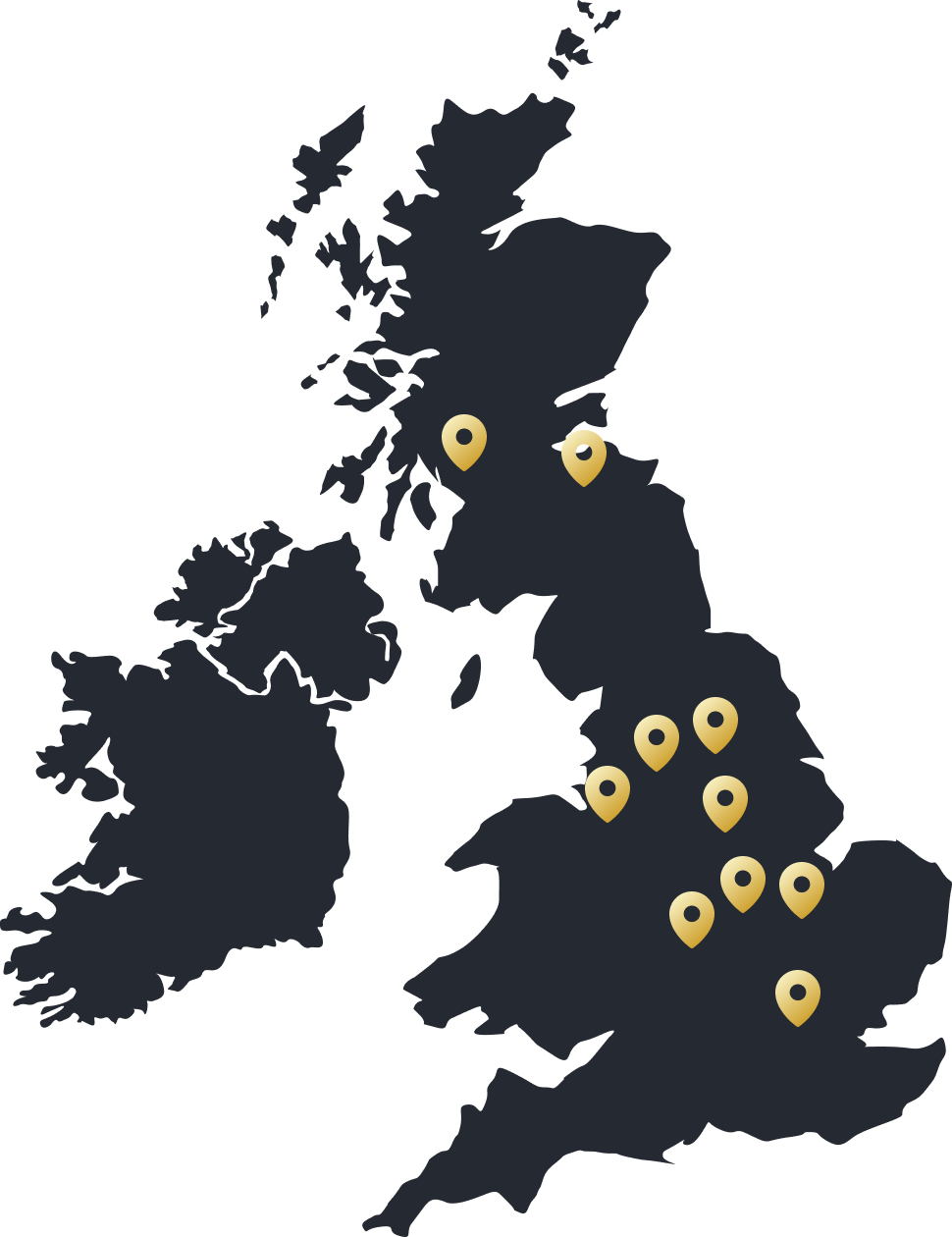
    Searching for intumescent painting contractors near you? Ark Fire Protection delivers intumescent coating and spray fireproofing services nationwide, with experienced teams mobilising to projects across the UK. Wherever your structural steelwork is, our intumescent paint contractors provide on-site and off-site application, surveys and dry film thickness (DFT) checks to keep your project on programme and compliant.

    View our locations

    Accredited Intumescent Coatings

    When it comes to Passive Fire Protection, you need a company that you can rely on. Ark Fire Protection is proud to be accredited by the leading industry bodies – ensuring that we always meet the highest standards of quality and safety, and that our customers can always expect a first-class service.


    We’re also ISO 9001 certified, meaning that our quality management systems are regularly audited and approved. So when you choose Ark Fire Protection, you can be confident that you’re making the best possible decision for your property.

    Why Choose Ark Fire Protection for Intumescent Coating Contractors?

    All Intumescent and cementitious coating works are third party accredited, Health & Safety accredited and ISO 9001 quality assured.

    Great intumescent fireproofing projects start with great technology

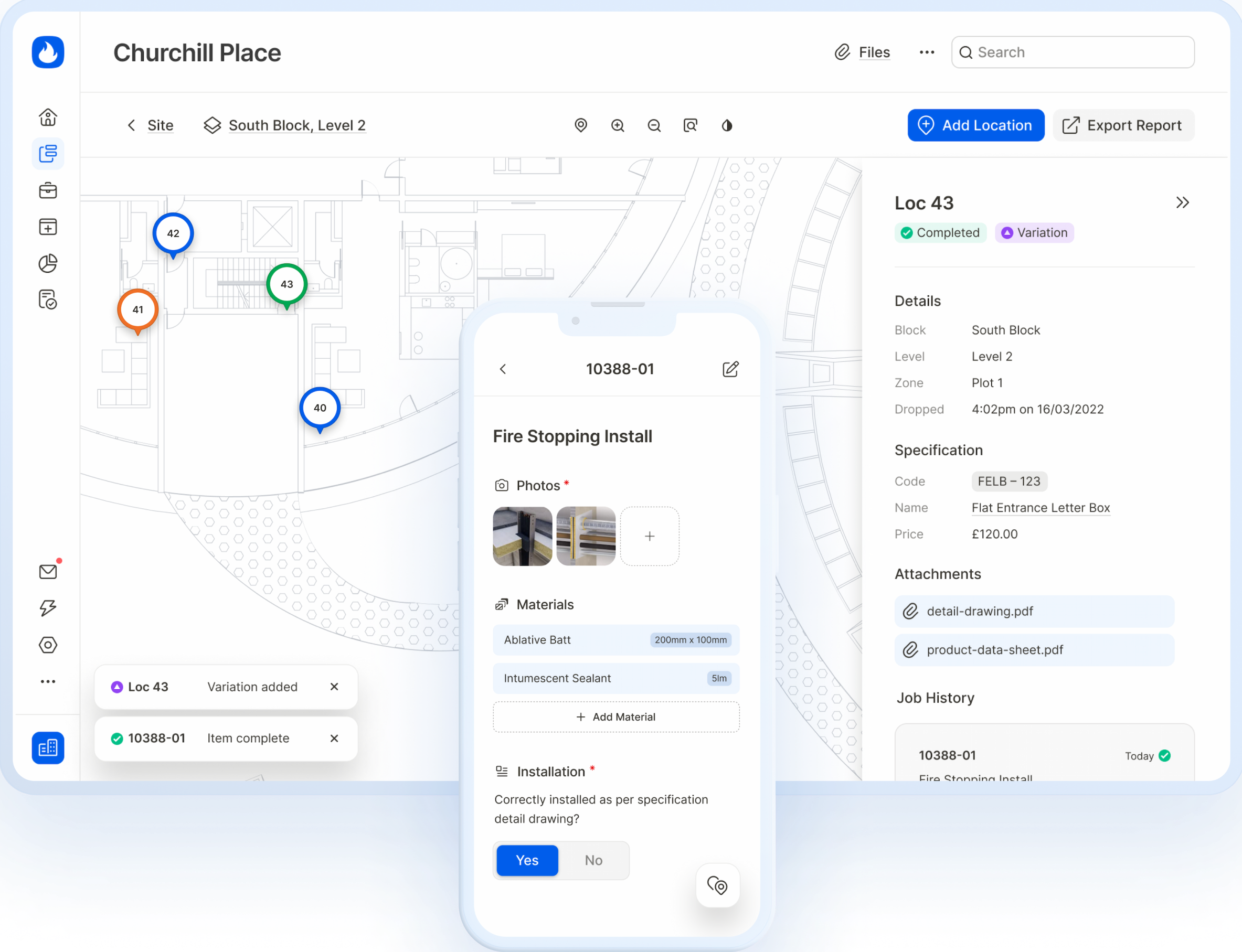
    For intumescent coatings, Onetrace turns thickness verification into a structured, defensible record. Each section is logged with its product and batch, the application conditions and the wet and dry film readings, against its section reference – building a digital trail that proves the right protection went onto the right steel for the required period. That record maps straight into the structural fire-protection evidence the building has to produce, so the protection is verified on paper as well as on the frame.

    Intumescent Coatings & The Critical Temperature

    During a fire the high temperatures reach can have a detrimental impact to the structural properties of steel. At 300°C the steel’s strength has already been compromised. When the temperature exceeds 550°C the structural strength of the steel has significantly decreased by around 40%. A typical building fire reaches temperatures around 1000°C giving context to how immense heat impacts structural steel.


    The critical temperature for structural steel typically ranges between 550°C – 650°C. At this critical temperature the structural steel will no longer be capable to support the weight of the building. Steels will start to distort and collapse.


    • Intumescent coating on structural steel with primer underneath before being exposed to extreme heat over 120° degrees.


    • Intumescent coating on structural steel after being exposed to extreme heat over 120° degrees.
    image w text bg

    When is Intumescent Paint Required?

    Intumescent Coatings are applied to buildings to delay the spread of fire as outlined in the standards set by BS 476 Parts 20 – 23 1987. These coatings are categorised by time, such as “30 minutes”. Our intumescent paint systems are available for both steel and timber structures –  and are often specified by building control authorities in the UK. 


    Coatings are assessed to BS EN 13381-8 (reactive protection to steel) and applied to achieve the period and section factor set by the structural fire design to Eurocode 3 Part 1-2, with products CE / UKCA marked under the Construction Products Regulation. The ASFP Yellow Book is the industry reference for application and inspection.

    image w text bg

    Experienced & Trusted Intumescent Paint Fireproofing

    Here at Ark Fire Protection, we’ve been providing trusted intumescent paint installation services for years to a wide range of different clients. Our certified, highly-trained technicians have extensive experience in all aspects of fire protection, and are dedicated to providing you with the highest quality service possible. From taking care of the initial consultation to applying the paint, we make sure that you’re safe and your property is protected from potential fires.


    We understand that every situation is different and tailor our approach to meet your individual needs. We always use high-quality products and take great care when installing them correctly according to industry standards.

    image w text bg

    Cementitious Coatings

    Cementitious fire protection is usually sprayed on successive layers of steel or concrete to protect from the devastating effects of fire and protecting the structural integrity of the building. Cementitious material is produced by mixing it with water to create a uniform slurry mix that is then pumped to a nozzle and sprayed directly onto the substrate. This helps reach all the hidden gaps for complete coverage.

    image w text bg

    How Do Cementitious Coatings Differs From Intumescent Coatings?

    Cementitious coatings are similar to intumescent coatings however they do not produce black smoke, char or expand when exposed to fire. Cementitious coatings are relatively inexpensive and are extremely effective at withstanding high temperatures.

    image w text bg

    The Ark Intumescent Fire Protection Services Include...

    • Intumescent Fire Protection for Steel
    • Intumescent Fire Protection for Wood & Timber
    • Soffit & Member Works to Car Parks
    • Fire stopping for Walls & Floors
    • On-site Thickness Checks & Certification
    • Insulation to Roof Spaces
    • Cavity Barriers to Ceiling Voids
    • Timber Fire Protection
    image w text bg

    The two types of intumescent coatings, Soft Char and Hard Char

    Soft char Intumescent Coatings


    Soft char intumescent paints generate a light char, which is a fantastic heat retardant. In the event of fire, water vapour (the hydrates), is released resulting in a cooling effect. Once all the vapour has been released, the remaining char will slow the heat transfer to the substrate. We use soft char intumescent paints primarily to protect structural steel internally.


    Hard char Intumescent Coatings


    Hard char intumescent paints produce a harder char, which is another brilliant fire retardant. Harder chars are made with sodium silicates and graphite. These paints are mainly used for plastic pipe protection, however can be used for steel fireproofing.


    image w text bg Bright and modern ceiling

    What are the Benefits of Using Intumescent Coatings?

    How Much Does Intumescent Paint Expand and Why is That Important for Fire Safety?

    A thin-film coating of intumescent paint will expand at a rate of 50:1, whereas a thick-film coating expands at a rate of 5:1, as a general rule. This expansion generates a microporous carbonaceous foam that significantly slows down the heat flow from the fire to the surface beneath it. This buys valuable time for individuals to escape the building, or for firefighters to extinguish the blaze.


    Intumescent coatings work by protecting steel surfaces from the high temperatures of fire. They act as an insulator, therefore keeping the structural integrity and shape of the steel as it should be; in turn, preserving the safety of the bulding that it is supporting. The application of intumescent coatings can be undertaken in multiple different ways. It can either be applied by hand or through spraying. We can apply intumescent coatings with leading applications such as the Putzmeister SP11 which will deliver a great finish.

    image w text bg

    Why Intumescent Coatings are Needed

    1. Fire Protection: To provide passive fire protection by delaying the spread of fire and the collapse of structural elements. When exposed to high temperatures, these coatings expand and form an insulating char layer, which protects the substrate from heat.


    2. Structural Integrity: Steel loses its strength and load-bearing capacity at high temperatures. Intumescent coatings help maintain the structural integrity of steel frames and components during a fire. By insulating the steel, these coatings provide critical extra time for evacuation and for firefighters to control the fire, potentially preventing collapse.


    3. Regulatory Compliance: Building codes and fire safety regulations require the use of fire-resistant materials and coatings in construction. Intumescent coatings help builders and property owners comply with these standards.

    image w text bg

    Working With Leading Manufacturers

    Intumescent Paint Contractors for a Range of Sectors


    Our team at Ark Fire Protection have years of experience when it comes to intumescent paint contracting. Whether it’s for CommercialNew BuildsHealthcare (NHS)Student AccommodationIndustrialEducationResidentialFacilities ManagementSocial Housing, or Insurance sector, we have the expertise and knowledge to provide high-quality intumescent paint application services.


    Different sectors have unique requirements when it comes to fire protection, and our team understands the importance of tailoring solutions to meet these specific needs. We work closely with architects, contractors, and building owners to provide customised intumescent paint applications that comply with all relevant regulations and standards.
     

    Intumescent Paint Frequently Asked Questions

    What is intumescent paint?

    Intumescent paint reacts when its temperature is, or exceeds, 120°C. This results in a soft charring effect at its surface (which insulates and reduces transmission of heat into the substrate) and the release of water vapour, which cools the substrate.

    What does intumescent mean?

    An intumescent is a substance that swells as a result of heat exposure, thus leading to an increase in volume and decrease in density. Intumescents are typically used in passive fire protection.

    What is dry film thickness (DFT) and why does it matter?

    Dry film thickness is the measured thickness of the cured coating. It’s the single most important quality measure for intumescent protection, because the fire-resistance period a coating delivers depends on applying the correct DFT for that steel section. Ark measures wet and dry film thickness as standard and records every reading, so the protection can be proven rather than assumed.

    What is a section factor and why does it change the coating thickness?

    A section factor (Hp/A) describes how quickly a steel section heats up relative to its mass – slender sections heat faster and need more coating to reach the same fire-resistance period. The required thickness is calculated per section factor and period, which is why a credible intumescent record is always section-by-section, never a single blanket figure.

    What's the difference between intumescent and cementitious coatings?

    Intumescent coatings are reactive – they swell when heated above roughly 120°C to form an insulating char. Cementitious coatings are inert sprayed layers that don’t char or expand but resist high temperatures and are relatively inexpensive. Ark applies both; the right choice depends on the specification, the environment and the finish required.

    Can intumescent coatings be applied off site or only on site?

    Both. Off-site (shop-applied) coating can speed the programme and control conditions; on-site application suits steel that’s already erected or needs touch-up after follow-on trades. Each has trade-offs around programme, environmental control and damage risk – Ark advises on the right split per project and documents the conditions either way.


    What standards govern intumescent coatings on structural steel?

    Approved Document B sets the structural fire-resistance requirement; coatings are assessed to BS EN 13381-8 (and the legacy BS 476 Parts 20/21), applied to the period and section factor from the structural fire design to Eurocode 3 Part 1-2, and CE / UKCA marked under the Construction Products Regulation. The ASFP Yellow Book is the industry reference for application and inspection.

    Why is intumescent coating a project-scale rather than a single-beam service?

    Mobilisation, access and spray plant make small jobs uneconomic to do properly. Intumescent coating is most cost-effective at project scale – commercial, industrial, logistics and large residential schemes with exposed steel – where the plant and certified application can be deployed efficiently and the evidence captured consistently across the frame.