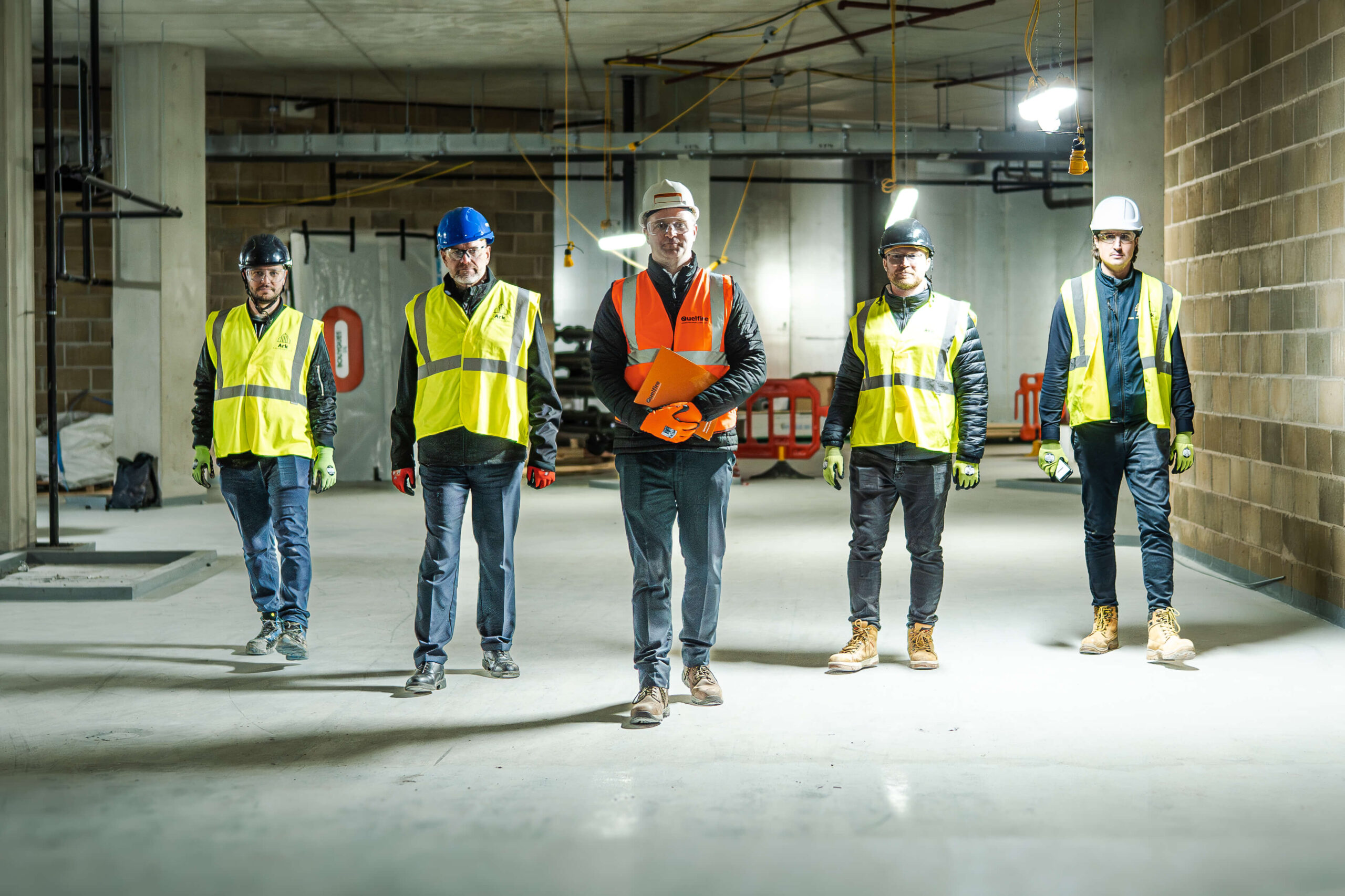
Landscape Image of Ark & Quelfire in safety gear.

Active Fire & Security Services

A fully structured active fire and security service – designed, installed and maintained by accredited engineers, nationwide.

citation approved certificate
Constructionline Gold Certification
Firas certification
Ark ISO 9001 - British Assessment Bureau Certificate
CHAS cert exp
Acclaim certification logo
British Assessment Bureau Certificate
SafeContractor Certificate
facilities line gold member logo
ASFP Logo

Nationwide Active Fire & Security Services

Ark Fire Protection designs, installs and maintains active fire and security systems for commercial, residential, healthcare, education and industrial clients across the UK. Our active fire division operates as a dedicated service, with its own accredited engineers, its own processes and full accountability from design through to ongoing maintenance.


As a company better known for passive fire protection, we are asked whether active fire is a genuine capability or an add-on. The answer is straightforward: it is a fully structured service, built properly, with the accreditations, supply chain and engineering resource to back it up.


For clients who use Ark for both passive and active fire, the benefit is a single provider who holds the complete fire strategy. One contract, one contact, one compliance picture.


Passive and active fire protection are not independent systems. The performance of fire stopping, compartmentation and fire doors directly affects the time available for detection and alarm systems to operate. When both disciplines are managed by the same contractor, design intent, evidence trail and ongoing maintenance all align under one relationship.

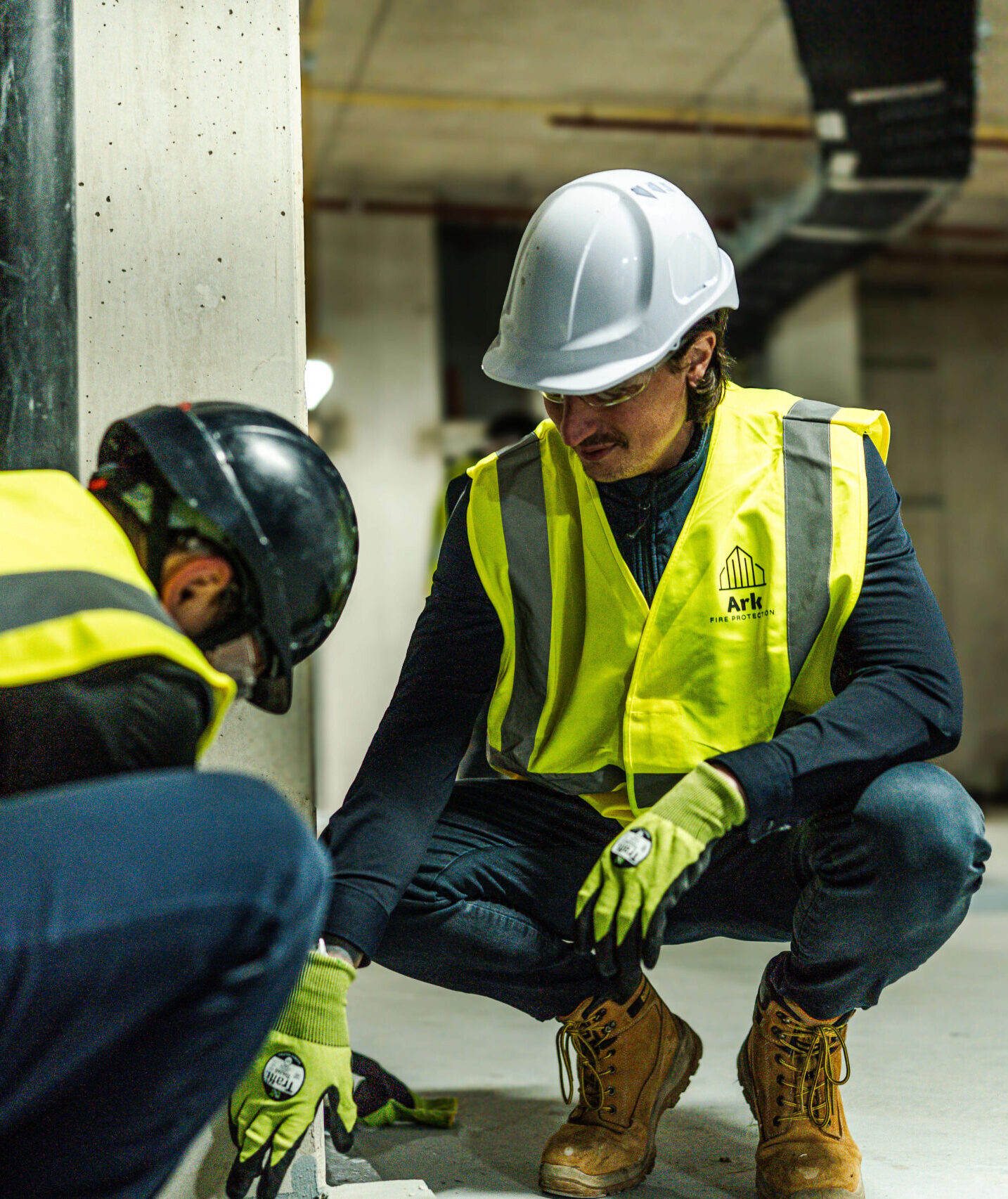
image w text bg Ark team members crouching to inspect works

Ark's Fire & Security Services

Ark delivers eight active fire and security disciplines, each as a standalone service or as part of a combined passive and active contract.

Fire Alarms

Design, installation and maintenance of fire detection and alarm systems to BS 5839. From simple single-zone systems to complex multi-site addressable networks.

Learn more

Emergency Lighting

Supply, installation and certification of emergency lighting to BS 5266. Escape route and standby systems for all premises types, with full testing and certification.

Learn more

Automatic Opening Vents

Installation and maintenance of smoke ventilation systems and AOVs. Critical life safety systems in residential blocks, stairwells and atria to BS 7346.

Learn more

CCTV

Design, installation and maintenance of CCTV surveillance systems to BS EN 62676, with structured maintenance and full documentation for compliance and insurance.

Learn more

Intruder Alarms

Graded intruder alarm systems designed and installed to BS EN 50131. Standalone systems or monitored networks across multiple sites.

Learn more

Access Control

Systems designed around how your building operates. Door entry to multi-door networked access, integrating with fire alarm and CCTV where required.

Learn more

Warden Call

Warden call and staff attack systems for sheltered housing, care homes and supported living schemes, designed to BS 8300.

Learn more

Disabled Refuge

Two-way communication systems between refuge areas and a central point during evacuation, installed to BS 5839-9 under Part M of Building Regulations.

Learn more

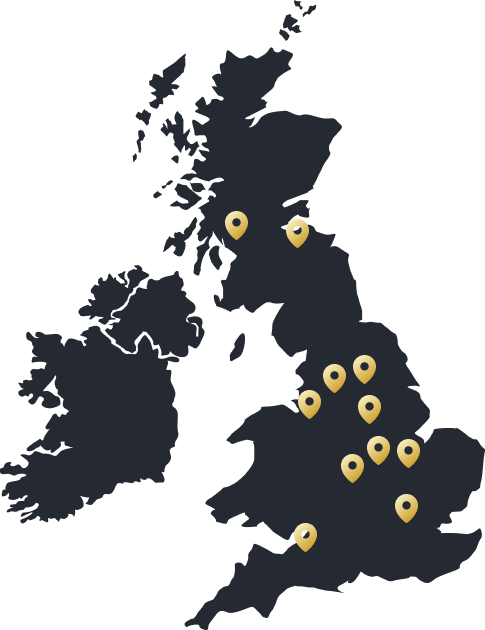
Based across the UK. Delivering everywhere.

Ark Fire Protection operates from regional bases covering the full length of the country, with engineers deployed across England, Scotland and Wales. Our project and maintenance work runs from London and the South East through the Midlands, the North West, Yorkshire, and into Scotland. Named engineers are assigned to contracts, with consistent attendance at the same sites wherever scheduling allows.


We provide active fire and security services across, but not limited to, the following areas:


Who we work with.

Housing Associations, Social Housing & HMOs

Social housing and HMO landlords carry significant compliance obligations under the Fire Safety Order and Housing Act. Ark works with housing associations and registered providers across large residential portfolios, delivering fire alarm systems, AOVs, emergency lighting, warden call and access control. We understand the pressures of planned maintenance cycles, void management and the documentation requirements of the Building Safety Act regime.

Healthcare

Healthcare premises require systems that support phased evacuation and staff response, not just standard alarm protocols. We work within the NHS and independent healthcare sector, installing and maintaining systems in occupied environments with minimal disruption to clinical activity. Our engineers understand the specific requirements of HTM 05-03 and the inspection regime expected by CQC.

Education

Schools, colleges and universities require systems designed around bell schedules, occupied and unoccupied periods, and the challenges of large open campuses. We deliver fire alarm design, emergency lighting and security systems across education estates, with documentation aligned to DfE guidance.

Commercial

Commercial offices, business parks and mixed-use buildings need systems that integrate across multiple tenants and building management platforms. We design and maintain fire detection, emergency lighting and security systems for single occupancy and multi-let buildings, with service contracts structured around the operational needs of facilities managers.

Industrial and Warehousing

Industrial premises present specific detection challenges: high ceilings, dust-heavy environments, and the risk of delayed detection in large open spaces. We specify beam detectors and aspirating systems where standard point detection is unsuitable, and design systems that meet insurer requirements for high-hazard storage environments.

Retail & Hospitality

Retail and hospitality premises require systems that work around trading hours, protect stock and cash, and meet licensing and insurance conditions. We deliver fire alarms, CCTV, intruder detection and access control for single outlets and multi-site operators, with maintenance contracts that minimise disruption to trading.

Local Authority & Public Sector

Local authorities manage complex and varied property portfolios: civic buildings, housing stock, schools, libraries and depots, each with its own compliance profile. Ark offers framework-ready pricing, transparent documentation and a single-provider model that simplifies compliance reporting across mixed-use estates.

The regulations that apply to active fire and security systems.

The primary legislative and standards framework within which active fire and security systems are designed, installed and maintained in the UK.

Regulatory Reform (Fire Safety) Order 2005

The principal piece of fire safety legislation for all non-domestic premises in England and Wales. Places a duty on the Responsible Person to carry out a suitable and sufficient fire risk assessment and ensure systems are maintained.

Learn more

Building Safety Act 2022

Introduced a new regulatory regime for higher-risk buildings above 18 metres. Establishes the Building Safety Regulator and places new obligations on Accountable Persons regarding fire and structural safety documentation.

Learn more

BS 5839: Fire Detection & Alarm Systems

The principal British Standard for fire detection and alarm systems. BS 5839-1 covers non-domestic premises; BS 5839-6 covers domestic. Sets out requirements for design, installation, commissioning and maintenance.

Learn more

BS 5266: Emergency Lighting

Governs the design, installation and maintenance of emergency lighting. Sets out testing requirements including monthly function tests and annual full-duration discharge tests, with results to be recorded in a log book.

Learn more

BS 7346: Smoke & Heat Control Systems

Applicable to AOV systems. Part 8 covers design, installation, commissioning and maintenance of smoke control systems using natural buoyancy – relevant for residential blocks, stairwells and atria.

Learn more

BS EN 50131: Intrusion & Hold-Up Alarms

The European standard for intruder alarm systems. Sets out grading requirements from Grade 1 to Grade 4. Insurance requirements and police response thresholds are often tied to the grade of system installed.

Learn more

Housing Act 2004 / HMO Regulations

Sets out fire safety requirements for houses in multiple occupation. The Management of HMO Regulations 2006 require that fire safety equipment including alarms is maintained in good working order.

Learn more

Approved Document B (Fire Safety)

Part of the Building Regulations for England. Sets out requirements for fire safety in new buildings and material changes of use, including requirements for alarm categories, emergency lighting and smoke control.

Learn more

Our Accreditations

Ark Fire Protection holds accreditations from the leading industry bodies, providing clients with confidence that our work meets current legislative requirements and British Standards.

Working With Leading Manufacturers

Active Fire & Security Services FAQs

What is active fire protection and how is it different from passive fire protection?

Active fire protection refers to systems that require action to work — either automatically or manually — in response to a fire. This includes fire detection and alarm systems, suppression systems, emergency lighting, AOVs and extinguishers. Passive fire protection refers to the structural elements built into a building to contain and slow the spread of fire: fire doors, fire stopping, compartmentation and intumescent products. Both are required under current UK fire safety legislation. Ark provides both, which means your fire strategy is designed and maintained as a whole.

Who is responsible for ensuring active fire systems are maintained?

Under the Regulatory Reform (Fire Safety) Order 2005, the Responsible Person for any non-domestic premises is legally required to ensure fire detection and alarm systems, emergency lighting, and other active fire systems are maintained in efficient working order and good repair. Failure to maintain systems can result in enforcement action, prohibition notices, and in serious cases prosecution. Ark provides maintenance contracts with documented service records.

How often do fire alarm systems need to be serviced?

BS 5839-1 recommends a minimum of two service visits per year for most commercial fire alarm systems, typically six months apart. More complex systems or high-risk premises may require quarterly visits. Emergency lighting requires monthly self-testing and a full annual discharge test, with results recorded. Ark’s maintenance contracts are structured around these requirements.

Do you cover design and installation as well as maintenance?

Yes. Ark covers the full project lifecycle: design, installation, commissioning and ongoing maintenance. We can enter at any stage, whether you need a system designed from scratch, an existing system upgraded, or a maintenance provider to take over a system already in place. Before accepting maintenance responsibility for a system we have not installed, we carry out a condition survey.

Can you manage fire alarm and security systems across multiple sites?

Yes. We work with housing associations, facilities managers and commercial operators managing portfolios of multiple sites. We structure maintenance contracts to cover all sites under a single agreement, with coordinated visit scheduling and centralised documentation. For multi-site clients, we assign a named account manager and a named lead engineer.

What is the difference between an L1, L2 and L3 fire alarm system?

These categories are defined in BS 5839-1 and describe the extent of fire detection coverage in a non-domestic building. An L1 system provides automatic detection throughout the entire building, offering the highest level of protection. An L2 system covers defined areas at highest risk and escape routes. An L3 system covers escape routes only. The appropriate category is determined by the fire risk assessment.

You're a passive fire company: are you actually qualified for active?

It’s a fair question, and we’d rather you ask it than assume.

Ark Fire Protection has built its active fire division with the same commitment that built our reputation in passive. That means dedicated engineers, not passive installers handed a fire alarm manual, but trained, certified, and working in active fire systems day in, day out.

We hold the accreditations that matter, work across the full scope of active fire, and can back all of it up with documentation before you sign anything. The passive side didn’t cut corners. The active side doesn’t either.

What accreditations do you hold for active fire?

We’re asked this a lot, and rightly so. Accreditation in active fire isn’t a nice-to-have and it’s the baseline for anyone who should be touching your systems.

For active fire work, Ark holds accreditation covering the design and installation of fire detection and alarm systems, maintenance contracts, and suppression systems where applicable.

If you want to see the certificates before we go any further, just ask. We’ll send them the same day.

How established is the active fire side: is it really up and running?

Ark’s active fire division is purpose-built, not bolted on. We have a dedicated team, accredited engineers and the supply chain in place to deliver from day one.

We’re not offering active fire as an afterthought to a passive contract. It’s a structured service with its own people, its own processes and its own accountability.

Do you have case studies or references in active fire?

Yes. We have completed projects we can reference across many sectors, including installations, system upgrades, and long-term maintenance agreements.

We can share case studies directly, orbut subject to client permission, connect you with contacts who can speak to their experience. If a reference in your specific sector matters to you, tell us and we’ll do our best to match it.

Can I see proof of insurance for the active side specifically?

Absolutely, and you should be asking this of any provider. Our public liability and professional indemnity insurance covers active fire work explicitly, not bundled under a vague general policy. We can provide a certificate of insurance at any stage of the conversation, before any commitment is made.

What exactly do you cover: alarms only, or also sprinklers, extinguishers, emergency lighting?

Our active fire scope covers:

  • Fire detection and alarm systems (design, install, commission, maintain)
  • Emergency lighting (design, install, testing, certification)
  • Portable fire extinguishers (supply, installation, annual service)
  • Sprinkler and suppression systems (design, install, commission, maintain) (subject to scope assessment)

If there’s a system type you need that isn’t listed, ask. We’d rather tell you honestly what we can and can’t do than overpromise.

Do you do design, install, commission and maintain: or just some of those?

All four. End to end, or any part of the chain depending on where you are in your project. Some clients come to us at RIBA Stage 2 for design. Others bring us in to install against a spec they already hold. Others just need a maintenance provider to take over an existing system.

What we don’t do is install systems we haven’t designed or assessed and then walk away. Wherever we enter the process, we take ownership of the work.

Which systems and manufacturers do you work with?

We work with a range of leading manufacturers across fire detection, alarm and security, including Advanced, C-Tec, Kentec, Fike, Ajax and Gent. We are not tied to a single brand by commercial arrangement.

The right system for your building is determined by the building: the risk profile, the size, the existing infrastructure and the budget. If you have a system already in place from a specific manufacturer, ask us whether we can work on it. In most cases the answer is yes.

Do you cover BS 5839 compliance end to end?

Yes, end to end. Ark covers every stage of the BS 5839 lifecycle: survey, design, installation, commissioning and ongoing maintenance. We work to BS 5839-1 for non-domestic premises and BS 5839-6 for domestic, as applicable.

That means a single contractor holds the complete documentation trail, from the initial site survey through to live maintenance records. If you’re ever audited or face an insurance query, the paperwork is in one place and it holds up.

What sectors have you worked in for active fire?

Our active fire work spans:

  • Commercial offices and business parks
  • Industrial and warehousing
  • Healthcare and care facilities
  • Education
  • Retail and hospitality
  • Residential and HMOs
  • New builds

If your sector isn’t listed, we’ll be straight with you if a project requires specialist knowledge outside our experience.

Can you handle a portfolio our size?

Depends on the portfolio, so let’s be specific. Tell us the number of sites, system types, maintenance visit frequency, and your response time requirements. We’ll tell you honestly whether it sits comfortably within our current capacity or whether we need to discuss phasing.

We won’t take on a contract we can’t service. That’s not a position we’d put ourselves in, or you.

We've got a contract running with our current provider: how do we manage that?

First, check your notice period. Most contracts run with 30–90 days’ notice, sometimes tied to a renewal date. We can help you review the relevant clause if you’re unsure.

Once notice is served, we work backwards from your exit date to plan the transition. We can operate alongside your current provider during handover, or step in clean once they’re out, whichever works. We’ve managed enough transitions to know the points where things go wrong. We plan for them.

Will you take on responsibility for an existing system, or is it a fresh install only?

We take on existing systems. But we do it properly. Before accepting maintenance responsibility for a system we haven’t installed, we carry out a condition survey. That gives us, giving us both a clear picture of what we’re inheriting: any defects, outstanding recommendations, or remedial work needed.

We won’t sign a maintenance contract against a system we haven’t assessed. Any provider who does should be a red flag.

How long would handover from our current provider take?

Handover timelines vary on a site-by-site basis. The key variables are the size and complexity of the system, the condition of the existing installation, and whether any remedial work is required before we can accept maintenance responsibility.

We carry out a condition survey before taking on any existing system. That survey tells us what we are inheriting and what, if anything, needs to be resolved before handover is complete. We’ll give you a realistic timeline once we’ve seen the system, not before.

What we can say is that we plan transitions carefully, we communicate clearly at every stage, and we won’t sign a contract against a system we haven’t assessed.

We've had bad experiences with providers who do both passive and active: what's different here?

Usually the problem isn’t doing both. The issue is doing both badly.

The common failure modes are: passive engineers being sent to do active work, account management that treats you as a number once you’re signed up, and siloed departments that don’t talk to each other when a problem spans both disciplines.

At Ark, passive and active are separate technical teams with separate accreditations. What’s shared is account management, with one point of contact who knows both sides of your fire strategy. The advantage of one provider, without the technical risk.

We’re not asking you to take that on trust. Talk to clients who’ve used us for both.

We already have a provider: why switch?

Don’t switch for the sake of it. Switch if your current provider isn’t delivering, whether that is missed visits, slow response times, poor documentation, or a maintenance contract that doesn’t reflect what’s actually on site.

What we offer isn’t a cheaper version of what you have. It’s a single provider who holds the whole fire strategy, covering both passive and active, in one place, with one point of accountability. If what you have is working, say so. We’ll still have an honest conversation about whether there’s value in bringing it under one roof.

How does your price compare to what we're paying now?

We won’t guess, but we will benchmark. Share your current contract details (scope, site count, visit frequency, call-out terms) and we’ll produce a like-for-like comparison. If we’re cheaper, we’ll show you by how much. If we’re not, we’ll tell you that and explain what you’re getting for the difference.

Switching purely on price is one of the things that leads to the bad experiences described above.

Is there a discount for using Ark for both passive and active?

Yes. Where a client uses Ark for both passive and active fire, we offer a reduced rate that reflects the combined value of that relationship. The saving is a genuine one, not a rounding error.

Beyond price, there are real operational benefits: one contact, one contract, coordinated visit scheduling, and no ambiguity about responsibility when an issue sits at the boundary of passive and active work.

Is the cost structured as call-outs, visits, or annual contract?

We offer all three models. Most clients benefit from a combination: an annual maintenance contract covering PPM visits and certification; included call-outs within the annual fee; and a pre-agreed ad hoc call-out rate for anything outside the contracted scope.

We’ll recommend the structure that fits how you actually use a provider, not the one with the highest headline figure.

Do you subcontract any of the work?

For the vast majority of our active fire work: no. Our own engineers carry out design, installation, commissioning, and maintenance.

Where we do work with accredited partner contractors, such as large-scale suppression in specialist environments, we tell you in advance and retain full contract responsibility. You are never passed off without your knowledge.

Who is the responsible person on your side day to day?

You’ll have a named account manager and a named lead engineer assigned to your contract. Both names, both direct contacts, in writing before you sign.

For maintenance visits, you’ll get the same engineer where we can schedule it, as consistency matters when someone needs to know your system. For emergency call-outs, you’ll have a direct number that reaches a real person, not a call centre.