











Passive Fire Protection for New Builds

Gateway 3 is the bottleneck. The Building Safety Regulator now averages 14.3 weeks per application against an 8-week target, and anything missing as-built information adds 6.8 weeks on top. Construction News (14 May 2026), citing Onetrace FOI data, named incomplete documentation as the single biggest delay factor.


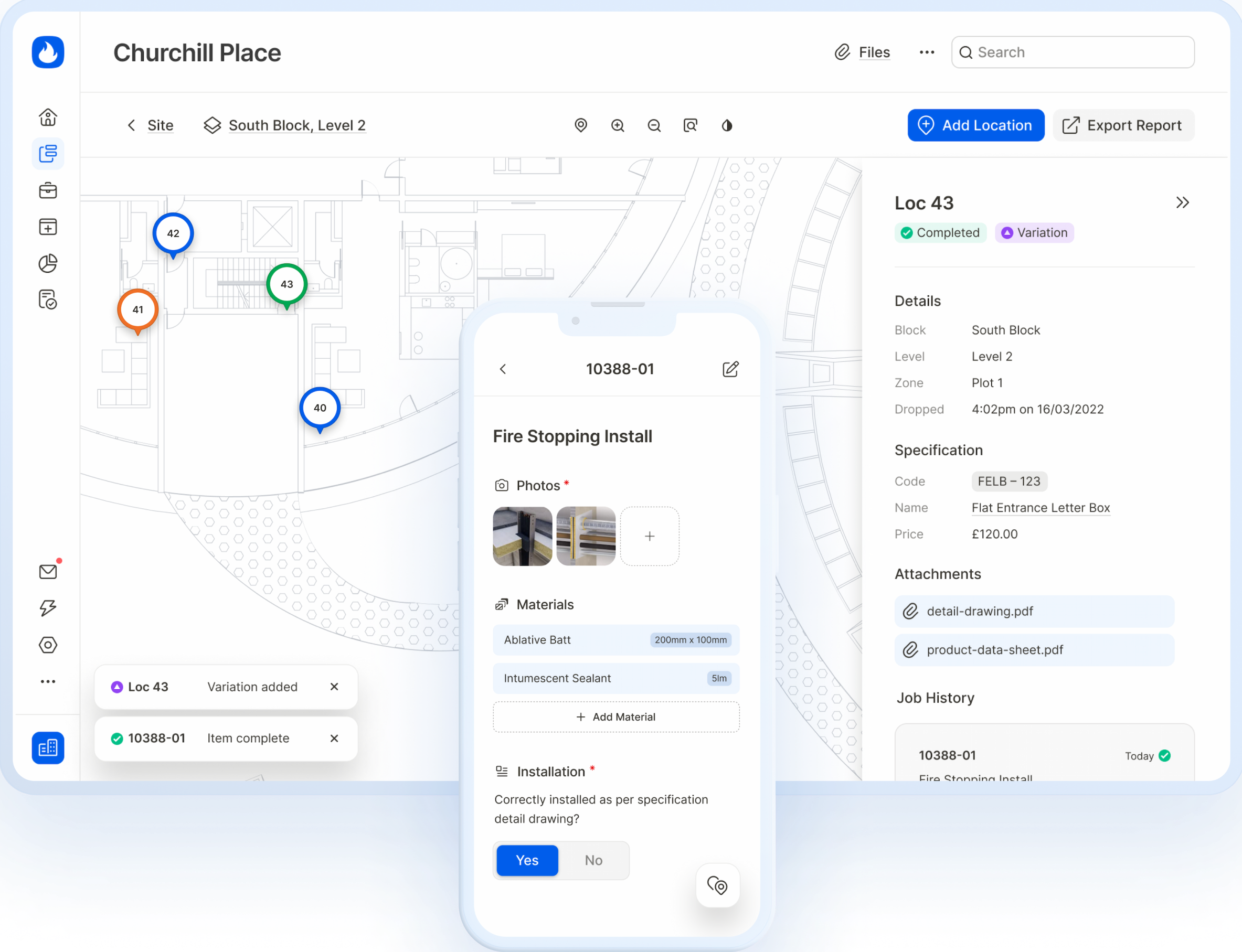
We build that documentation from day one. Every fire stop, door, and barrier is captured live in Onetrace, with product, installer, certification, photo, grid reference, and sign-off, flowing straight into the golden thread. Not reconstructed at handover. Already there.

citation approved certificate
Constructionline Gold Certification
Firas certification
Ark ISO 9001 - British Assessment Bureau Certificate
CHAS cert exp
Acclaim certification logo
British Assessment Bureau Certificate
SafeContractor Certificate
facilities line gold member logo
ASFP Logo

    Why Gateway 3 is the bottleneck

    The Building Safety Act’s three-Gateway regime is now the spine of every new build over 18m or 7 storeys. Gateway 3 is the final approval, the Building Safety Regulator’s sign-off that the building is safe to occupy. Without it, the building cannot let, cannot complete, and cannot be handed over.


    The BSR’s 8-week processing target has been comprehensively missed. FOI data filed by Onetrace and reported in Construction News on 14 May 2026 shows applications averaged 14.3 weeks in the year to March 2026. Any application with incomplete as-built information took a further 6.8 weeks on top. That’s a 54% time penalty for missing documentation alone, with the schemes most exposed being the ones with the weakest on-site record-keeping.


    Greg McClelland, co-founder of Onetrace, put it directly in that story:


    “The industry as a whole needs to be more methodical and get used to recording compliance and as-built information in a much more structured way and recording the information properly. That way, the golden thread information is recorded as a matter of course, making Gateway 3 applications much easier to put together and faster to process.”

    Greg McClelland, Co-founder, Onetrace · Construction News, 14 May 2026


    That’s the platform we build every passive fire job on.

    image w text bg

    How Ark gets you through Gateway 3 faster

    For every penetration, fire door, and fire barrier on an Ark project:


    •     Captured in Onetrace at the point of install, not later
    •     Product data sheet, batch number, FIRAS certificate, installer ID, photo, grid reference, install date, all logged together
    •     Three-stage sign-off before any record is committed
    •     Output: a structured digital golden-thread entry that maps directly to the Gateway 3 application format the BSR expects


    When the Principal Designer compiles the Gateway 3 submission, the passive fire protection record is already in the format and the structure the BSR wants to read. No reconstruction at handover. No site walks chasing missing photos. No 6.8-week time penalty for incomplete information.


    Cheap subcontractors don’t get you through Gateway 3 faster. Subcontractors with the documentation already done do.

    image w text bg

    Two paths through a new build, which one are you on?

    I’m in early engagement


    For Preconstruction Managers, Design Managers, and Building Safety Leads.


    You’re two years out from a spade hitting the ground. You’re scoping the passive fire strategy, coordinating design intent with build detail, and preparing the Gateway 2 submission. You need a partner who can sit in design reviews, flag specification gaps before buy-out, and underwrite the golden-thread evidence the BSR will eventually want at Gateway 3.


    I’m on a live project


    For Commercial Managers, QSs, and Project Directors.


    You’re mid-programme. You need fast surveys, fast pricing, certified installers on site at the volume the programme calls for, and an audit trail that closes out cleanly at handover. Cheap doesn’t get you through Gateway 3. Competitive, with cost certainty, zero surprises, and the documentation already in BSR format, does.

    image w text bg

    What happens when passive fire protection goes wrong

    If your evidence is wrong


    A fire stop without product data, installer ID, and photographic evidence is a fire stop the BSR cannot accept. Under the Building Safety Act, weak evidence isn’t just a compliance problem, it’s personal liability for dutyholders. Firms are being made to go back up to thirty years on historic projects. A handful have already gone under.


    If there’s no QA on site


    Failures only get discovered at handover, and by then the cost is rework, programme delay, and the 6.8-week Gateway 3 time penalty for missing as-built information. The Tier 1 wears it. The QS inherits the variations. The PM misses PC.


    How Ark de-risks Gateway 3


    Onetrace-backed evidence capture from day one. Every penetration recorded with product data, installer, photo, date, and grid location, straight into the golden thread the BSR expects at Gateway 3. Certified installers, tested-system discipline, three-stage sign-off. The Gateway 3 documentation is the deliverable, not a by-product.

    image w text bg

    Tier 1 new builds we've delivered

    Surface these as a case study card grid linking to existing /case-studies/ pages. The Bowmer + Kirkland reference is currently buried under /collaboration/ and should be front-line social proof here.


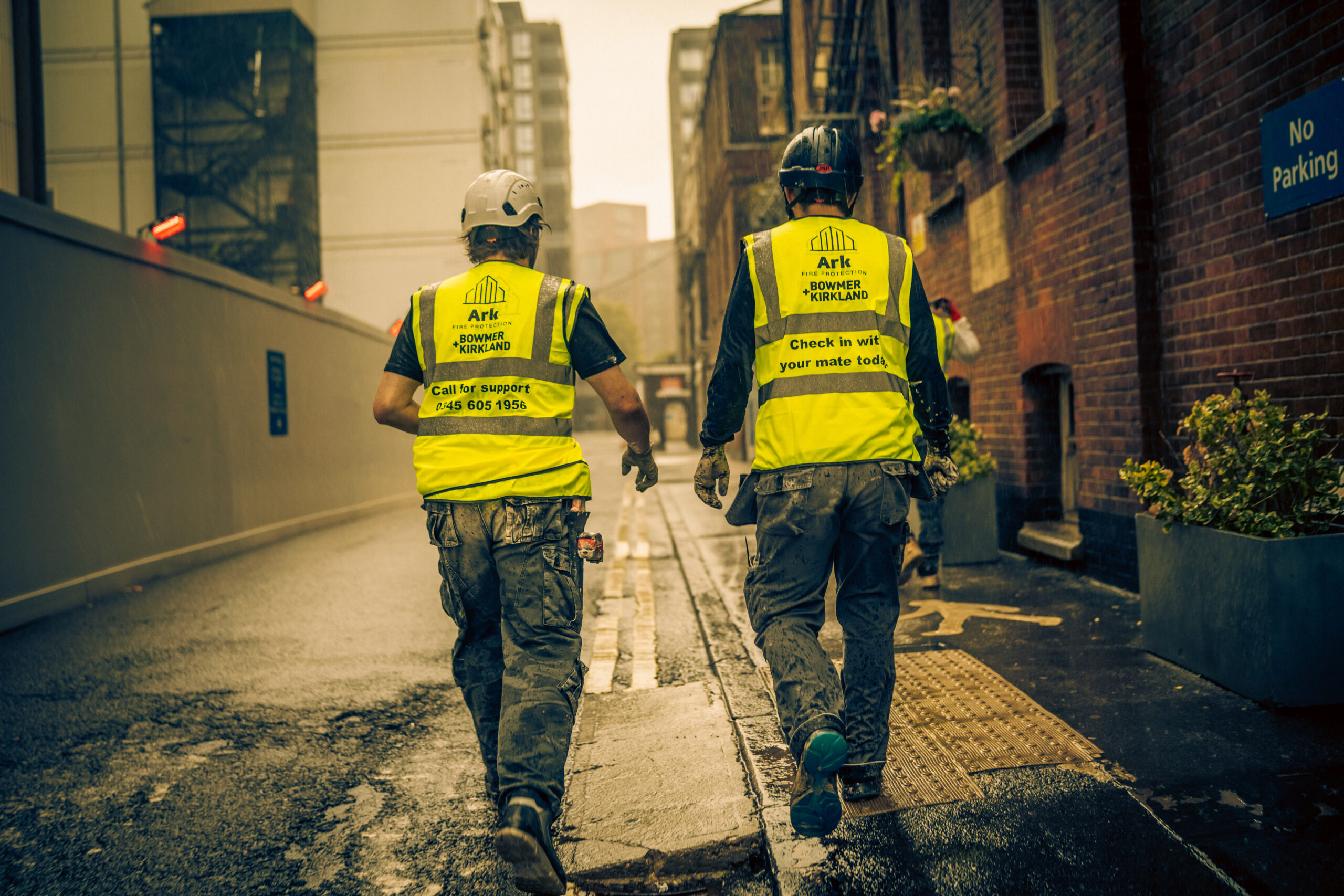
    • Bowmer + Kirkland partnership, Ark’s strongest Tier 1 reference.
    • The Oval Village, major London residential scheme.
    • St William Clarendon Road, Berkeley Group / St William joint venture.
    • Derby Housing Development, Tier 1 new-build housing.
    • Tustin Estates, high-profile Southwark regeneration.
    • Manchester Fire Station, blue-light new-build.
    image w text bg

    Industry-Leading Passive Fire Protection Solutions for New Builds

    From fire-rated walls and doors to fire-stopping and compartmentation, our team of experts at Ark Fire Protection offers a wide range of passive fire protection solutions for new builds. These systems are designed to delay or prevent the spread of fire and smoke, providing occupants with valuable time to safely evacuate the building. For years, we have been the go-to choice for developers looking for reliable and efficient passive fire protection solutions for their new builds. Trust our team to deliver superior protection and peace of mind for your next project.


    Get in touch

    Ark’s Passive Fire Protection Services for New Builds

    Discover our extensive selection of passive fire protection services for New Build projects across the UK. Passive fire protection serves two crucial purposes: enhancing the safety of structures for efficient evacuation and minimising the risks associated with fire hazards. Take a look at our range of services below to find out how we can maximise safety in your project.

    Fire Stopping

    Discover our extensive selection of passive fire protection services for New Build projects across the UK. Passive fire protection serves two crucial purposes: enhancing the safety of structures for efficient evacuation and minimising the risks associated with fire hazards. Take a look at our range of services below to find out how we can maximise safety in your project.

    Find out more

    Fire Doors

    Fire doors play a crucial role in creating compartmentation within new builds. At Ark Fire Protection, we offer a range of services related to fire doors. Whether you require a new door closer or a complete fire door upgrade, our team can provide fire door maintenance with third-party accreditation. Trust us to ensure the safety and security of your building.

    Find out more

    Intumescent Coatings

    Intumescent coatings provide a proven and effective solution for safeguarding new builds against structural damage. Our team meticulously tests all of our intumescent coatings to ensure they meet EU standards. This commitment to quality provides our customers with the confidence of advanced fire protection, mitigating potential threats to the structural integrity of their buildings.

    Find out more

    External Fire Barriers

    External Fire Barrier systems offer an effective solution for preventing the spread of fire and smoke in roof and ceiling areas, as well as concealed voids in new buildings. These fire barrier systems are specifically designed for voids located up to 10.5 metres. Vertical fire barrier systems provide impressive insulation and integrity periods of up to 120 minutes, while friction fire barrier slabs offer up to 60 minutes of reliable protection.

    Find out more

    Fire Curtains

    Ark Fire Protection specialises in installing and maintaining fire curtains that are crafted from flexible fibre. These curtains are specifically designed to be installed in challenging areas or spaces without structural supports, like ceiling voids or lofts, where movement may occur. Whether you need fire curtains for integrity or insulation, we offer a comprehensive range of options tailored to meet your specific requirements.

    Find out more

    Partitions

    Fire partitioning is a crucial safety measure implemented during new construction projects to effectively curb the spread of fire. This involves the installation of internal walls and ceilings that confine the fire within specific areas or rooms of the building for a limited period. By containing the fire, this approach allows occupants to locate escape routes and mitigates damage to the building, as only designated areas are affected.

    Find out more

    Fire Remedial Works

    Our FRA services for new constructions encompass the reinstatement or reimplementation of various passive fire protection measures that currently fall short of the necessary fire safety standards. Our remedial works for fire risk assessment are designed to enhance your building’s fire safety standards to the required level, aligning with the latest guidelines and regulations.

    Find out more

    Get in touch!

    Whether you have questions, require further information, or would like to discuss your specific needs for passive fire protection solutions, our dedicated team is here to assist you.

    Contact Us

    Accredited New Build Fire Protection

    When it comes to Passive Fire Protection, you need a company that you can rely on. Ark Fire Protection is proud to be accredited by the leading industry bodies – ensuring that we always meet the highest standards of quality and safety, and that our customers can always expect a first-class service.


    We’re also ISO 9001 certified, meaning that our quality management systems are regularly audited and approved. So when you choose Ark Fire Protection, you can be confident that you’re making the best possible decision for your property.

    End-to-End New Build Fire Stopping Solutions

    We offer comprehensive end-to-end solutions for passive fire protection in new builds. Our services encompass everything from design and installation to maintenance and remedial works. With our all-inclusive approach, your building will be equipped with state-of-the-art PFP systems that meet the highest industry standards. Trust us to provide a reliable and comprehensive solution for safeguarding your premises against fire hazards. Contact us today to learn more about our services and how we can help ensure the safety of your new build project.

    image w text bg

    Great new build passive fire protection projects start with great technology

    Onetrace isn’t a reporting layer bolted onto the end of a job. It’s the operating system behind every penetration we install. Every fire stop, fire door, and barrier is logged in real time with product batch, installer ID, FIRAS certificate, photo, and grid reference. The data flows straight into the Principal Designer’s golden thread and Gateway 3 application, already structured the way the BSR wants to read it. No reconstruction at handover. No 6.8-week time penalty for missing information. No rework at FRA stage.

    Get in touch

    Fire Stopping Regulations for New Builds

    According to Approved Document B under the Building Regulations 2010, new dwellings must comply with Volume 1 and all other building types with Volume 2. Higher-risk buildings of 18 metres or more are also subject to the Building Safety Act 2022:


    • Fire separation between compartments must be achieved using tested and certified passive fire protection systems throughout
    • Structural elements must be specified to achieve the fire resistance periods required for the building use and height
    • Protected escape routes must be maintained through the correct installation of fire doors, intumescent seals and fire stopping
    • For higher-risk buildings, a golden thread of building information including all fire safety specifications must be maintained throughout design, construction and occupation


    The document and its amendments outline the appropriate procedures for implementing fire stopping measures. Our team of specialists can provide valuable assistance throughout this process to guarantee optimal protection for your project.

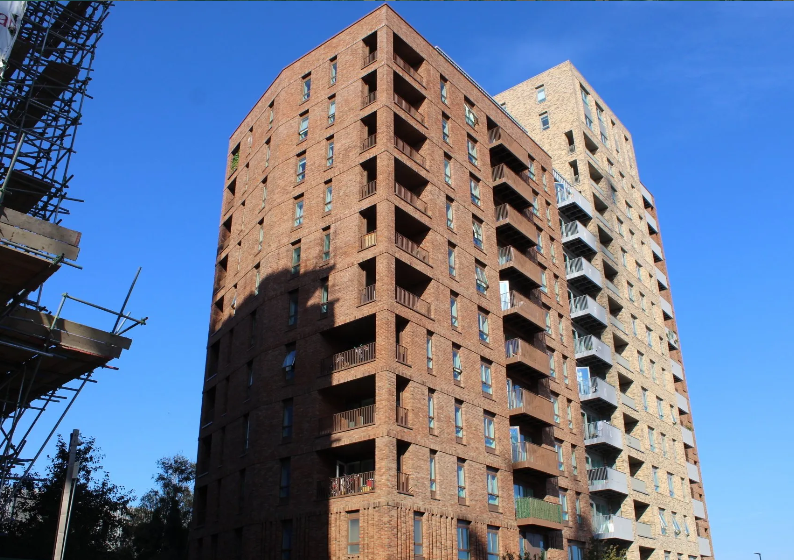
    image w text bg Residential tower block at the Clarendon Road regeneration site, London N8

    What Is Passive Fire Protection in New Build Projects and Why Is It Needed?

    Passive fire protection in new build developments refers to fire resisting measures that are designed and built into the structure from the outset to limit the spread of fire and smoke, protect escape routes, and maintain structural stability without the need for activation. These measures typically include fire resisting walls and floors, fire doors and compartmentation, fire stopping to service penetrations, cavity barriers, fire barriers, and protective coatings applied to structural steel.


    In new build projects, passive fire protection plays a critical role in ensuring the building complies with fire safety requirements before occupation. Early integration of passive systems helps prevent hidden fire spread through cavities, voids, and service routes, which can otherwise compromise life safety. In the UK, effective passive fire protection is essential for achieving compliance with Building Regulations Approved Document B, supporting sign off at completion, and ensuring the building is safe for its intended use from day one.

    image w text bg

    Working With Leading Manufacturers

    New Build Passive Fire Protection FAQs

    Why is Gateway 3 taking so long?

    Construction News reported on 14 May 2026, citing FOI data filed by Onetrace, that the Building Safety Regulator is taking an average of 14.3 weeks to process Gateway 3 applications, against an 8-week legal target. The single biggest delay factor is incomplete as-built information, which adds a further 6.8 weeks on top. Schemes with structured documentation captured at install go through faster.

    Who is responsible for passive fire protection on a new build under the Building Safety Act?

    The Principal Contractor and Principal Designer hold dutyholder responsibilities under the BSA, including ensuring passive fire protection is correctly specified, installed, and evidenced as part of the golden thread. On higher-risk buildings, this evidence is formally reviewed by the Building Safety Regulator at Gateway 2 and Gateway 3.

    What's the difference between Gateway 2 and Gateway 3?

    Gateway 2 is the BSR review of design before construction begins. Gateway 3 is the review of as-built evidence before occupation. Both require defensible evidence that passive fire protection has been designed and installed to the tested system. Weak evidence at either stage halts the project, and at Gateway 3 the average processing time is now 14.3 weeks.

    When should passive fire protection be engaged on a new build?

    At preconstruction. Two years out from breaking ground is increasingly typical for Tier 1 contractors. Early engagement allows the passive fire strategy to inform design coordination, buildability, and the Gateway 2 submission, and avoids the spec-vs-install gaps that surface during installation and ultimately cause Gateway 3 information gaps.

    What is the golden thread and what does it have to contain for passive fire protection?

    The golden thread is the digital, structured, transferable record of design and construction information for a higher-risk building. For passive fire protection it includes product data sheets, tested system references, installer competence records, install photos, location data, and inspection sign-offs, all retained for the lifecycle of the building. It’s also what feeds the Gateway 3 application directly.

    How does Ark capture golden thread evidence on site?

    Through Onetrace. Every penetration, door, and barrier is logged in real time with product, installer, FIRAS certificate, photo, and grid location. The output is a structured digital record that flows straight into the Principal Contractor’s golden thread and Gateway 3 application.

    Is Ark FIRAS certified for new build work?

    Yes. Ark’s fire stopping is third-party certified by FIRAS, alongside ISO 9001 quality management, Constructionline Gold, CHAS, SafeContractor, and ASFP membership. Certificates are available for download in the accreditations section.