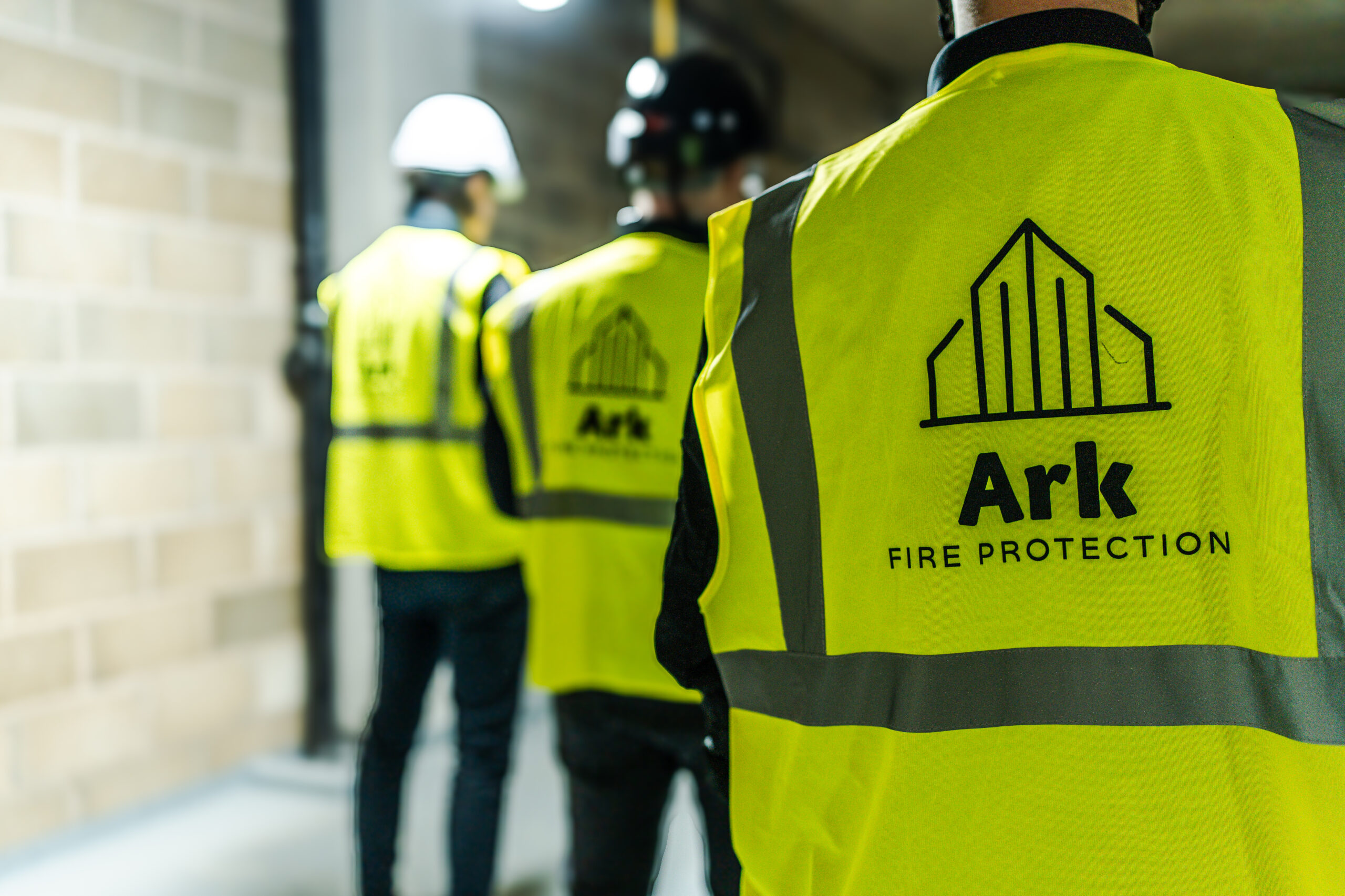
3 members of the Ark team on site wearing branded high-vis jackets.

Fire Rated Partitions and Partition Wall Installation

A fire-rated partition is only as good as the way it’s built, which is why Ark’s fire-rated partitions are installed by FIRAS-certified fitters to the tested system, and documented so the compartmentation can be proven, not just claimed.


We build fire-rated walls, shaftwall and steel-framed systems from 30 to 120 minutes for Tier 1 contractors, fit-out and drylining packages, and estates teams across new build, refurbishment and higher-risk buildings nationwide – to Approved Document B, tested to the BS EN 1364 / BS 476 standards, and classified to BS EN 13501-2.

citation approved certificate
Constructionline Gold Certification
Firas certification
CHAS cert exp
Acclaim certification logo
SafeContractor Certificate
facilities line gold member logo
ASFP Logo

    What Are Fire Rated & Fire Resistant Partitions?

    Fire Rated Walls & Partition Wall Systems

    Fire rated partitioning is the process when constructing a building to ensure fire safety by preventing fire spread. They are internal walls, and ceilings which ensure that a fire, for a limited time, will only be contained in that room or area of the building. This ensures that people within the building have enough time to find escape routes, as well as potentially causing minimal damage to the establishment as only a certain area is affected.


    Any and every fire starts small and grows. If combustible materials and oxygen are available with no physical barriers, it will attack the structure of the initial room it was caused in and spread. A fire-rated partition wall prevents this by creating a containment which ensures the fire cannot spread for a certain period of time. Partition times can range from 30 to 240+ minutes, ensuring the safety of the people in the building.


    A fire-rated partition wall has been regulated and checked by the appropriate British & European standards. Here at Ark Fire Protection we are highly skilled and experienced in installing fire partition walls within buildings.

    image w text bg Ark logo on the back of 3 high vis jackets.

    Vertical & Horizontal Fire Rated Partitioning

    Types of Fire Rated Partitions

    Fire rated partitions are critical for containing fire and protecting escape routes. There are two main types: vertical and horizontal, each serving a different function within a building’s fire strategy.


    • Vertical partitions are integrated into walls to prevent fire spreading between rooms, even through combustible materials like plasterboard. Gaps for pipes, cables, or sockets are “weak spots” in the partition and should be sealed with certified penetration seals to maintain fire resistance.
    • Horizontal partitions are installed between floors or ceilings to stop fire and smoke from moving vertically through a building. They are particularly important in multi-storey structures, protecting escape routes and maintaining compartmentation between levels.


    At Ark Fire Protection, we work with third-party accredited manufacturers such as FSI Promat and British Gypsum to provide tested and certified solutions. Our installations follow industry guidance, including The White Book, ensuring the most effective passive fire protection for your site.

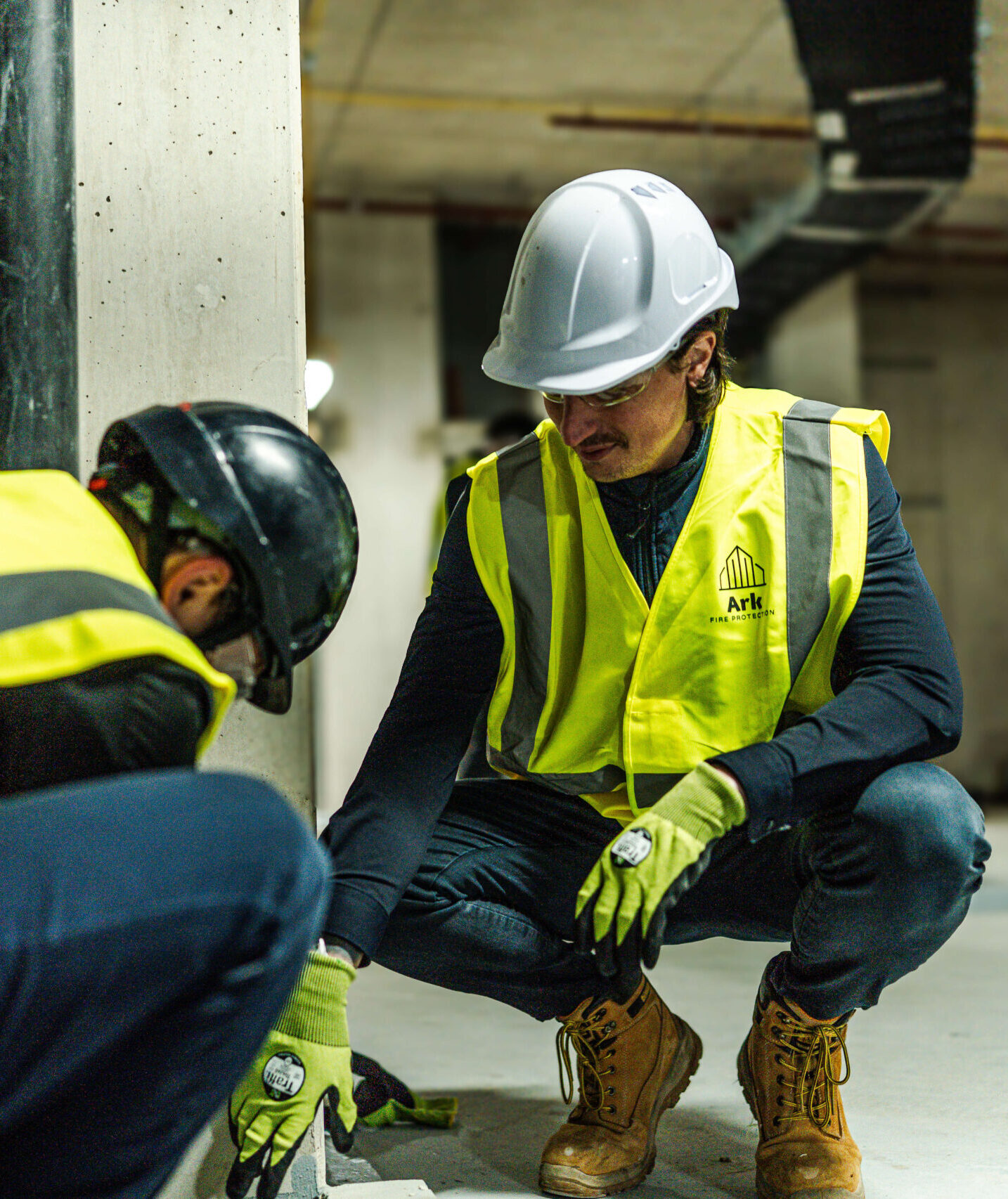
    image w text bg Ark team members crouching to inspect works

    Fire Rated Partition Wall Installation & Construction Near Me

    Nationwide Fire Partition Installation

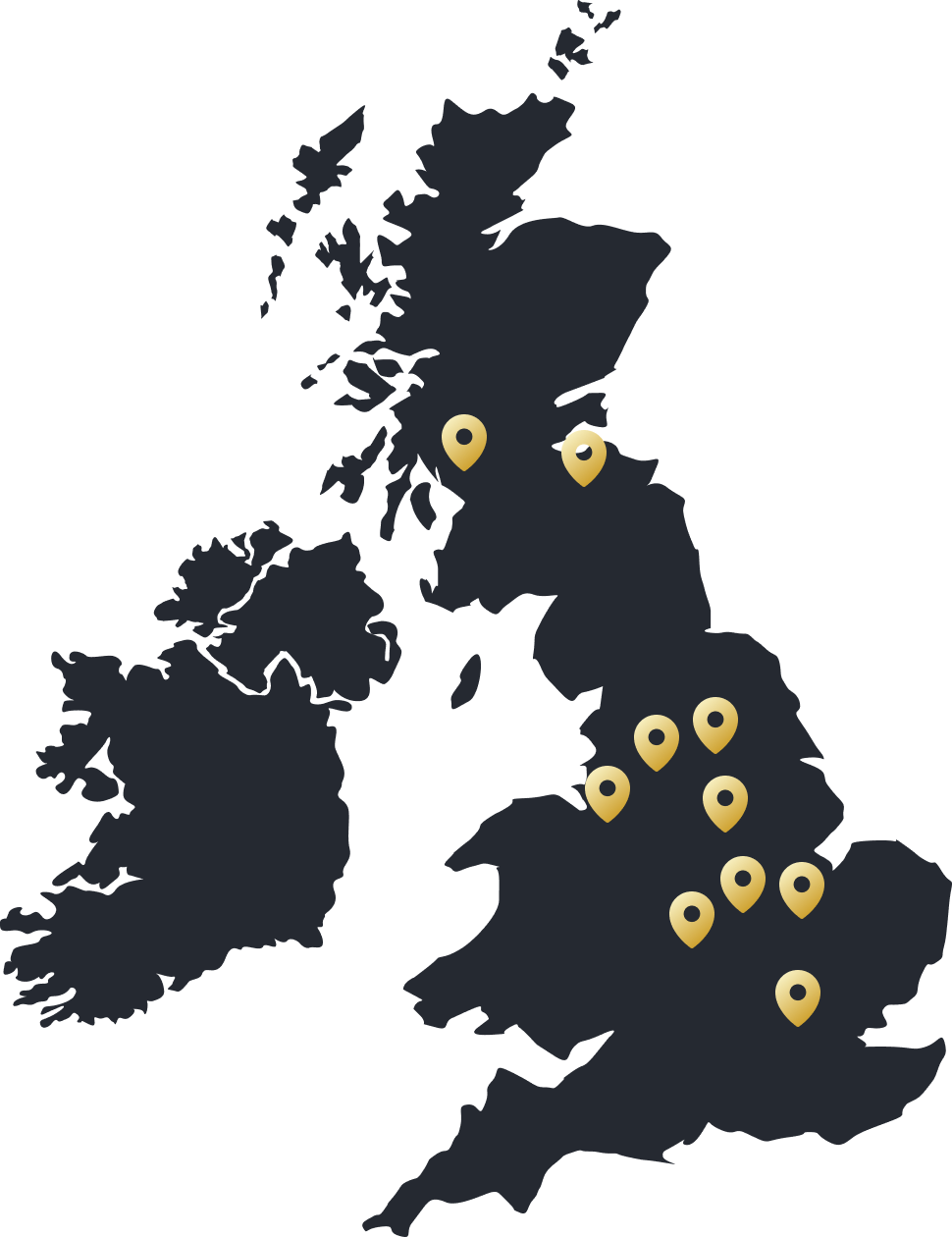
    We provide our fire rated partition installation expertise around the entirety of the UK but have offices in the following locations.


    Get in touch with our team for assistance on your next fire partition project.

    View our locations
    Map of the UK with gold service location markers

    A certified partition, not a self-declared one

    The single most common way a fire-rated partition fails is not the board – it’s the build. A wall made from certified components but installed off-spec is no longer a certified wall. The rating depends on the whole assembly going in as tested: the correct number and thickness of boards, the right stud gauge and centres, tested fixings and joint treatment, insulation where the system requires it, a properly detailed deflection head, and every pipe, duct and cable penetration fire-stopped to a tested detail.


    Ark’s installation is third-party certified by FIRAS – an independent body audits how we build, not just the products we use, which is the assurance a product datasheet on its own can’t give. Every partition is installed to the manufacturer’s tested system (British Gypsum, Promat, Siniat and others), and any deviation from the tested detail is confirmed in writing before work starts, not discovered at inspection.

    What happens when a fire-rated partition goes wrong

    If the wall isn’t built to the tested system


    The certified EI rating is void. Wrong board build-up, missed insulation, an incorrectly detailed deflection head, or an unsealed penetration all breach the compartment line – and because it’s hidden behind plaster and finishes, nobody sees it until an intrusive survey or a fire. On a higher-risk building it also breaks the golden thread the Building Safety Regulator expects.


    If the penetrations aren’t controlled


    A perfectly built wall is only compartment-tight until the next trade drills through it. Uncontrolled service penetrations, over-cut openings and abandoned holes are the most common defect found on partitions at handover – each one a direct path for fire and smoke that voids the wall’s rating.


    How Ark handles it


    FIRAS-certified installation to the manufacturer’s tested system, correct deflection-head and junction detailing, and every penetration fire-stopped to a tested detail by the same accountable team. Each partition line is captured in Onetrace – system, board build-up, location, photos and sign-off – so the compartmentation is evidenced for the fire strategy, the FRA and, on an HRB, the Gateway submission.

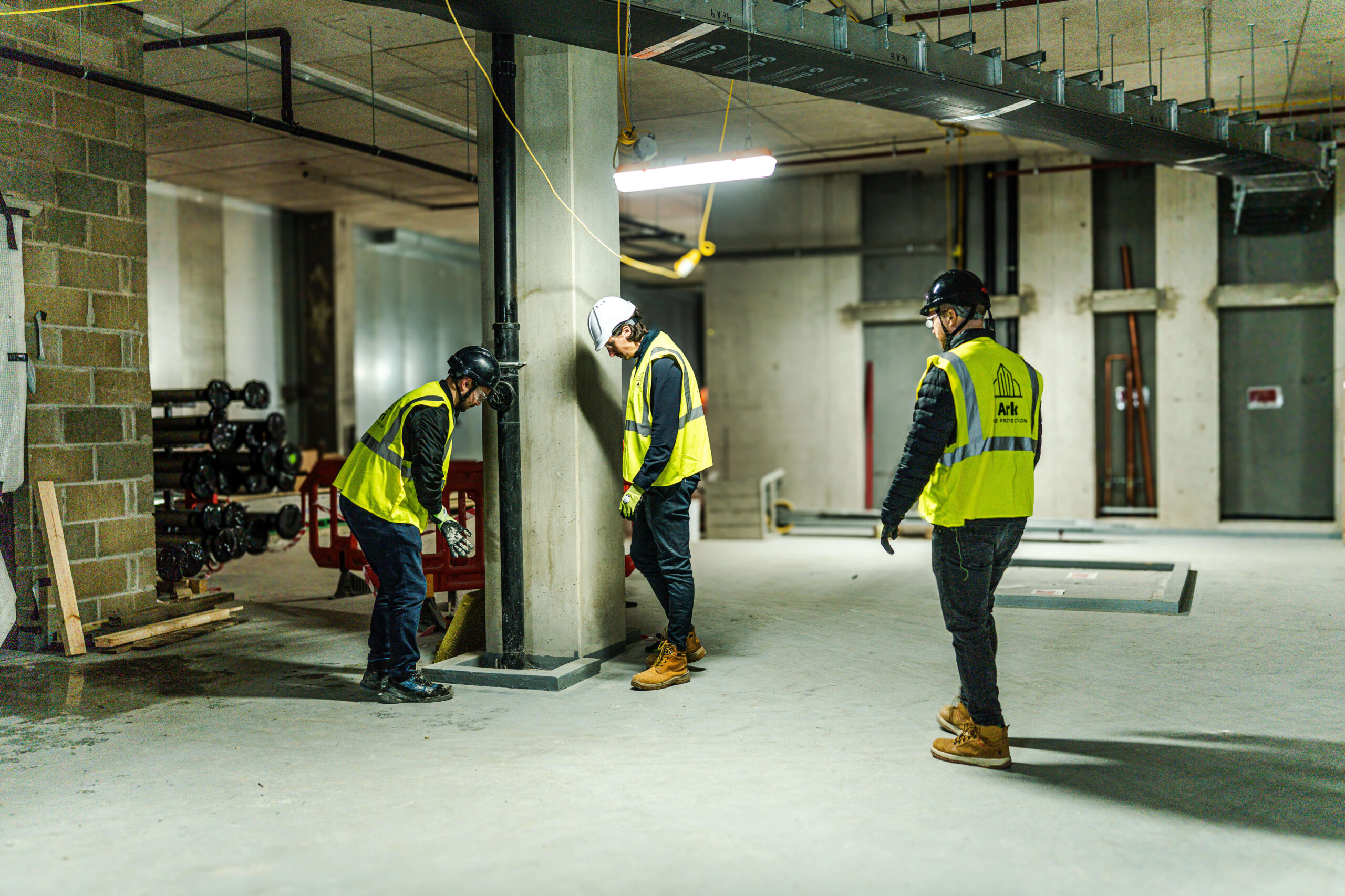
    image w text bg Ark team inspecting works on site.

    Why Choose Ark Fire Protection for Fire Rated Partitioning?

    Ark Fire Protection are industry specialists with a wealth of experience providing passive fire protection services in Greater London & The UK. We are fully qualified and accredited to carry out all passive fire works and pride ourselves on our high quality of service and workmanship.

    Great fire rated partition projects start with great technology

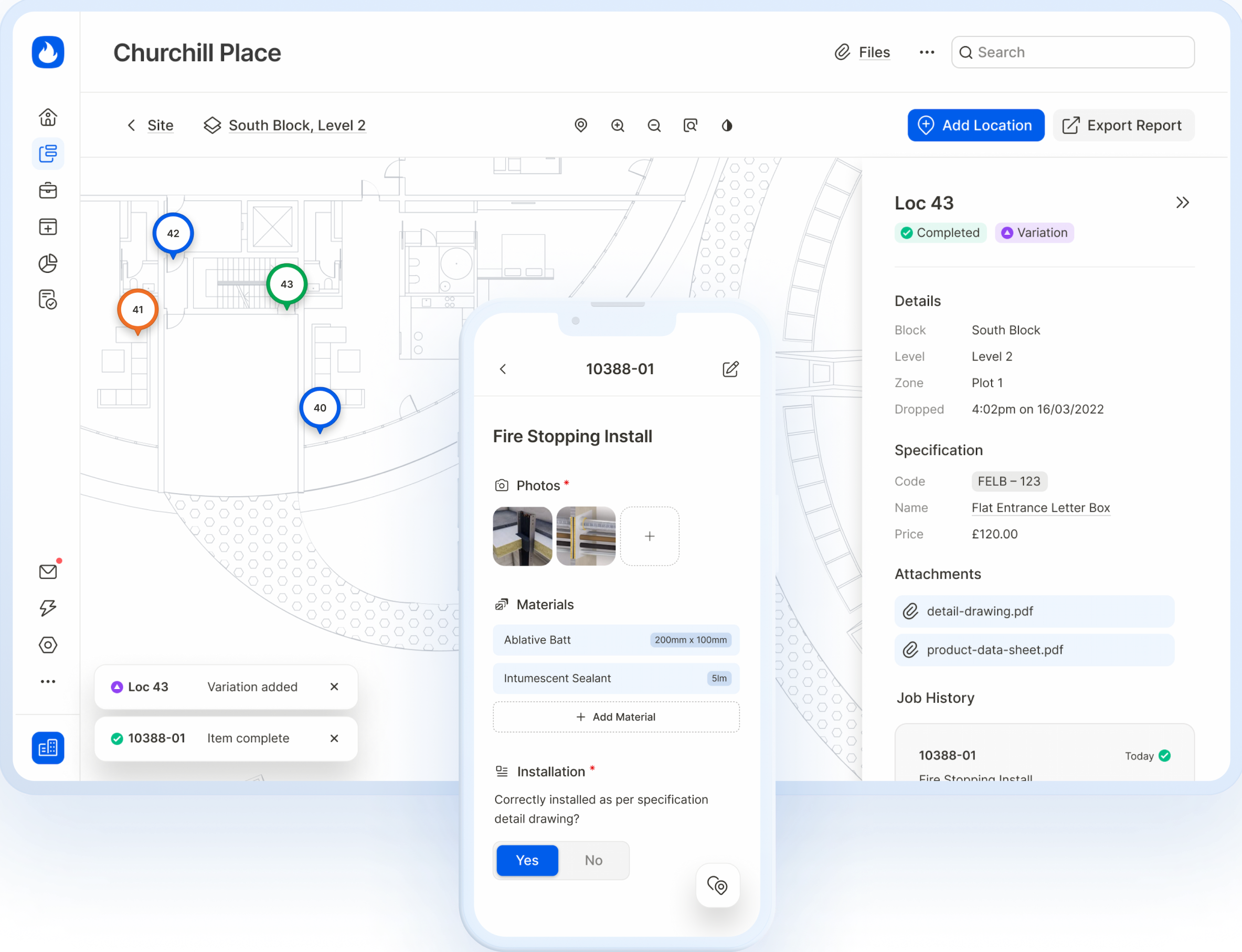
    A partition disappears behind plaster and finishes the moment it’s signed off, so the record is the only lasting proof it was built right. In Onetrace, every partition line is logged as it goes up – the tested system used, the board build-up and fire rating, the location, photographs of the junctions and penetrations, and sign-off. The result is an evidence trail that shows the compartment line is continuous and built as tested, ready for the fire strategy, a future FRA, or an HRB Gateway submission – long after the wall is closed up.

    Onetrace app tracking a fire stopping installation task

    Fire-Resistant Materials Used in Fire Rated Partitioning

    Gypsum Boards: A popular and effective choice for fire partitioning due to their excellent fire-resistant properties – composed of a non-combustible core, primarily made of gypsum. When exposed to fire, gypsum boards help to contain the spread of flames and smoke, providing crucial time for evacuation and emergency response. They are lightweight, easy to install, and offer significant thermal insulation.

     

    Cement board systems: For example, the Vermiculux a non-combustible calcium silicate board which provides up to 240 minutes fire protection to structural steel. Not only can these boards provide you with a fire-rated shaft wall system, but they can also be used on steel for protection. This gives you multiple options when attacking fire protection for structural steel, not only can you use the Vermiculux board amongst many other board systems, but we can also offer you intumescent coatings, cementitious coatings, or beam clad insulation boarding.

    image w text bg Looking up at glass skyscrapers against the sky

    Fire Rated Partitioning Regulations

    Fire-rated partitions in the UK are governed by a layered framework of building regulations, test standards and, on higher-risk buildings, the Building Safety Act. Ark specifies, installs and documents to all of it:


    • Building Regulations 2010, Approved Document B – the legal basis for compartmentation in England – Volume 1 (dwellings) and Volume 2 (buildings other than dwellings) set where fire-resisting walls are required and the periods they must achieve.
    • Regulatory Reform (Fire Safety) Order 2005 – places the duty on the Responsible Person to ensure compartmentation, including partitions, is adequate and maintained through the life of the building.
    • BS EN 1364-1 – the current European fire-resistance test method for non-loadbearing walls – the standard a partition system is actually tested to.
    • BS EN 13501-2 – the classification standard that turns test data into the EI ratings you see specified – E (integrity) and I (insulation), e.g. EI 30/60/90/120 minutes.
    • BS 476: Parts 20-22 – the legacy British fire-resistance test standards, still widely referenced in existing specifications and fire strategies.
    • BS EN 1366 series – the test standards for service penetrations and installations – the interface where partitions most often fail, and why penetration sealing is part of the partition scope, not an afterthought.
    • Building Safety Act 2022 – on higher-risk buildings (18m+ or 7+ storeys), compartment walls form part of the golden thread and the safety case the Accountable Person must maintain, with evidence reviewed by the Building Safety Regulator at Gateway.
    • Third-party certification – FIRAS – independent certification of the installer and the installation, not just the product; the ASFP promotes third-party certified installation as best practice for exactly this reason.

    image w text bg Four workers in hi-vis vests walking down a city street

    Why are Fire Partitions Needed?

    Fire partitions are essential for maintaining safety and structural integrity within a building. They:

     

    • Contain fire and smoke – Prevent flames and smoke from spreading between rooms or floors, limiting damage and protecting occupants.
    • Protect escape routes – Ensure corridors, stairwells, and exits remain safe and accessible during a fire.
    • Support structural stability – Help maintain the integrity of walls, floors, and ceilings under fire conditions.
    • Ensure regulatory compliance – Meet the requirements of Building Regulations, BS 476, and EN 13501-2, reducing legal risk and improving overall fire safety.
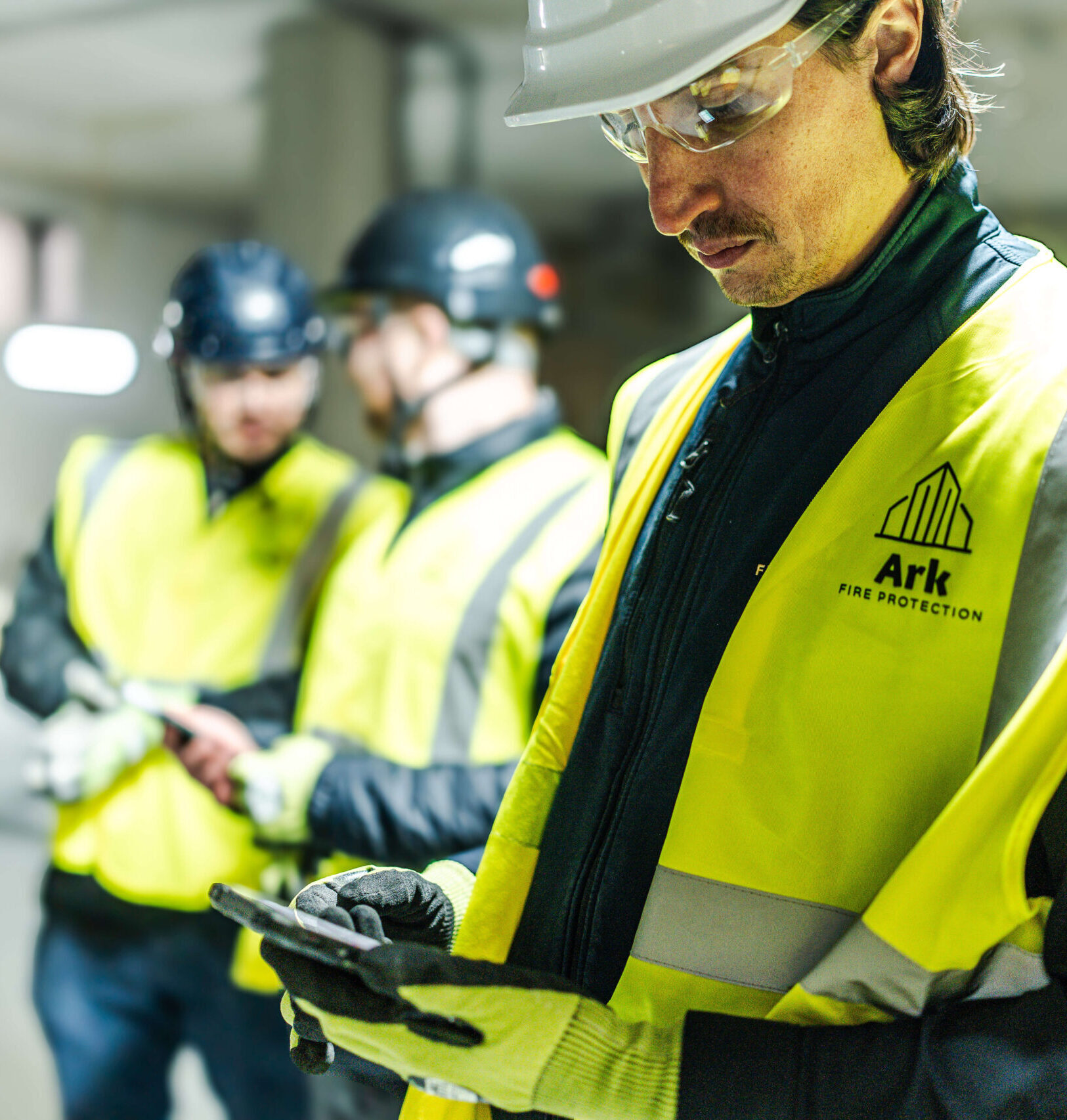
    image w text bg Man in Ark high vis checking works on One Trace app.

    Our Fire Partition Case Studies

    On a new-build residential development in Derby, we delivered the fire-rated compartmentation that keeps each home in its own fire-resisting box — the compartment wall and floor lines that stop fire and smoke passing between dwellings. Every element was completed to its tested specification and recorded as we went, so the compartmentation could be evidenced rather than assumed. It’s the same discipline we bring to every fire-rated partition: build to the certified system, and prove it on handover.
    image w text bg 3 members of the Ark team on site wearing branded high-vis jackets.

    Working With Leading Manufacturers

    Fire Rated Partitions for a Range of Sectors


    Our team at Ark Fire Protection have years of experience in designing and installing fire rated partitions for a range of sectors, including Commercial, New Builds, Healthcare (NHS), Student Accommodation, Industrial, Education, Residential, Facilities Management, Social Housing, and Insurance sector. Our goal is to provide our clients with the highest level of fire protection while also considering the aesthetics and functionality of their space. We understand that each sector has its own unique requirements and regulations, and we ensure that our fire rated partitions meet all necessary standards.


    To discuss your specific project needs and obtain a quote, please contact us on 0333 023 0470 today.


    Fire Wall & Partitioning Frequently Asked Questions

    1. What is a fire-rated partition and why is it important?

    A fire-rated partition is a wall or barrier designed to resist fire and smoke for a specified period, maintaining compartmentation and protecting escape routes. They are essential for limiting fire spread, safeguarding occupants, and supporting compliance with fire safety regulations.


    2. How long can fire-rated partitions resist fire?

    Fire-rated partitions are tested to withstand fire for specific durations, typically 30, 60, 90, or 120 minutes, depending on the construction, materials, and certification. The rating indicates the period the partition can maintain integrity and insulation under fire conditions.

    3. What types of fire-rated partitions are available?

    There are two main types: vertical partitions, integrated into walls to prevent horizontal fire spread, and horizontal partitions, installed between floors or ceilings to stop vertical fire and smoke movement. Both types may include penetration seals for services like pipes or cables to maintain full fire resistance.

    4. Which standards and regulations govern fire-rated partitions in the UK?

    Fire-rated partitions must comply with BS 476, EN 13501-2, and Building Regulations Approved Document B, which set requirements for fire resistance, compartmentation, and safe evacuation routes. Certified products and correct installation are critical for compliance.

    5. How long does it take to install a fire-rated partition?

    Installation time depends on the size, type, and complexity of the partition, as well as site conditions. Simple vertical partitions may take a day or two, while larger horizontal or multi-storey systems can take longer. All work should be completed by trained professionals following manufacturer and regulatory guidance.

    6. What maintenance is required for fire-rated partitions?

    Maintenance involves regular inspections to ensure integrity, checking seals, repairing damage, and verifying that penetrations remain correctly sealed. Documented inspections and maintenance help ensure ongoing compliance and effectiveness throughout the partition’s lifespan.

    7. What does an EI30 or EI60 fire-rated partition mean?

    EI is the European fire-resistance classification under BS EN 13501-2: E is integrity (holding back flame and hot gases) and I is insulation (limiting heat transfer through the wall). EI30, EI60, EI90 and EI120 are the minutes each is maintained. The rating only applies if the wall is built to the tested system it was classified against.

    8. Does a fire-rated partition have to be installed by a certified installer?

    For the rating to be relied on, the partition must be installed exactly as the system was tested, and the Responsible Person has to be able to demonstrate that. Using a FIRAS-certified installer is how that competence is evidenced. Ark’s installations are third-party certified and logged digitally, so the certificate and the built wall say the same thing.

    9. Who is responsible for fire-rated partitions in a building?

    The Responsible Person under the Regulatory Reform (Fire Safety) Order 2005 – usually the building owner, employer or managing agent – is accountable for compartmentation being adequate and maintained. On higher-risk buildings the Accountable Person carries duties under the Building Safety Act, with the partition forming part of the golden thread.

    10. Why do penetrations matter so much in a fire-rated wall?

    Every pipe, cable or duct through a fire-rated partition is a potential breach. Unless each penetration is fire-stopped to a tested detail, it voids the wall’s rating. Ark treats penetration sealing as part of the partition scope and records each one, so the compartment line stays continuous.

    11. Can fire-rated partitions be installed or upgraded in an occupied building?

    Yes. Ark installs and upgrades fire-rated partitions in occupied and live buildings, phasing the work around the occupier, protecting escape routes, and keeping disruption to a minimum – with a digital record for every wall line.