Passive Fire Protection for Social Housing

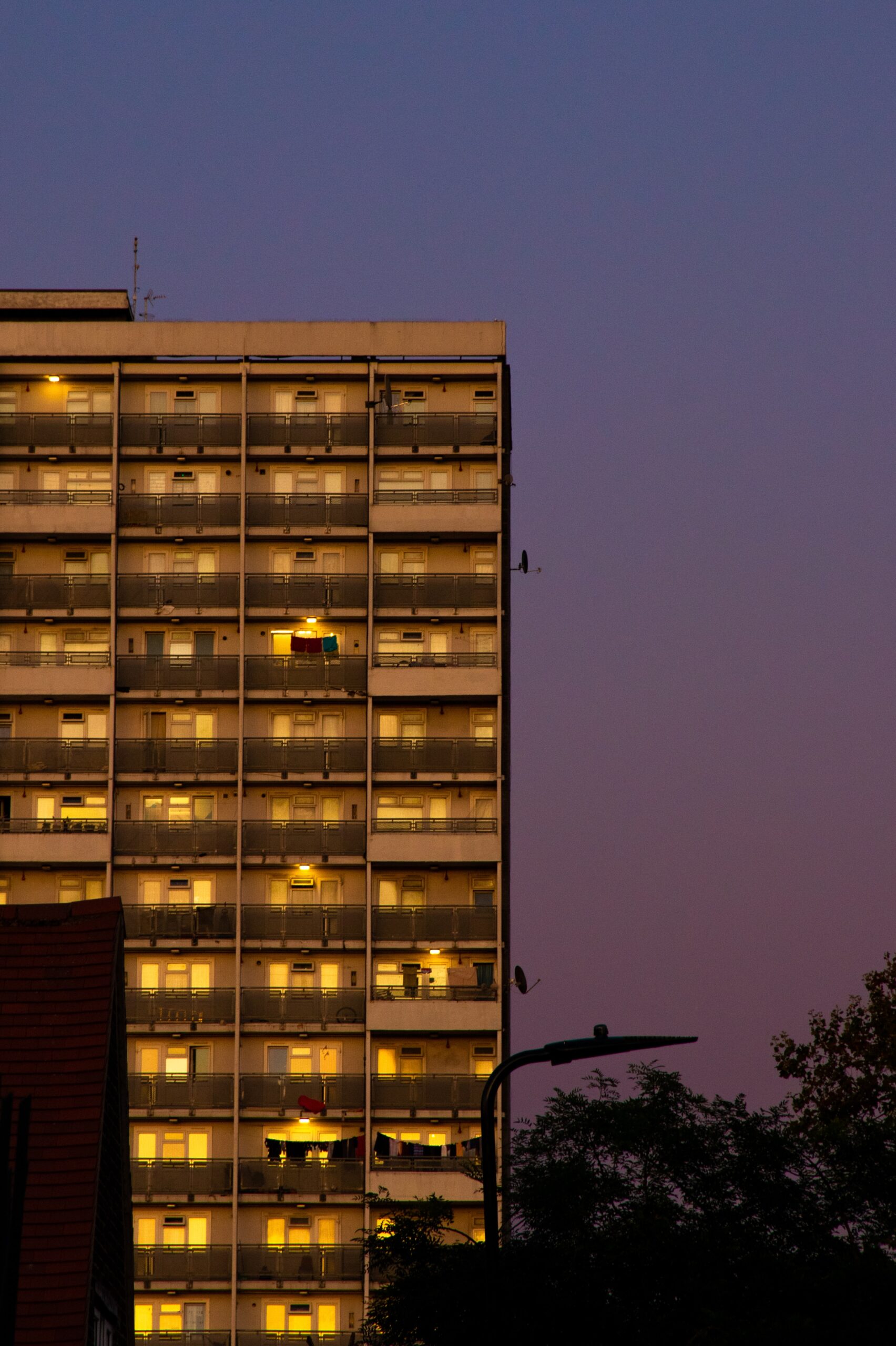
Social housing fire safety has changed twice in five years – first with the Building Safety Act, then with the Fire Safety (England) Regulations 2022, and again with Awaab’s Law extending the Regulator’s reach into hazard response. The Responsible Person, the Accountable Person, and the Asset Manager all sit inside the same regulatory frame – and all need the same thing: defensible, on-the-record evidence that compartmentation works.


Ark delivers passive fire protection programmes across the social housing sector — for large national housing associations, ALMOs, London boroughs, and metro councils. Whether you’re managing a single 11m+ block or a 50-block remediation programme, the regulatory frame is the same.

citation approved certificate
Constructionline Gold Certification
Firas certification
Ark ISO 9001 - British Assessment Bureau Certificate
CHAS cert exp
Acclaim certification logo
British Assessment Bureau Certificate
SafeContractor Certificate
facilities line gold member logo
ASFP Logo

    Where your fire safety obligation actually sits

    Social housing landlords now answer to four regulators at once: the Building Safety Regulator (Accountable Person duties on HRBs), the Regulator of Social Housing (consumer standards), the Health and Safety Executive (Fire Safety Order), and – since Awaab’s Law – fixed timeframes for responding to known hazards.


    What that means in practice for passive fire protection:


    •     Fire Safety (England) Regulations 2022 – monthly common area door checks and quarterly flat entrance door checks on every 11m+ building. Missing inspections are a direct breach.
    •     Building Safety Act – Accountable Person duties. Safety case reports, mandatory occurrence reporting, and golden thread information for every HRB in your portfolio.
    •     Awaab’s Law – fixed deadlines for responding to fire-safety-relevant hazards. Slow remediation isn’t a budget problem any more, it’s an enforcement problem.


    Every job we deliver leaves behind the evidence that proves these duties have been met.

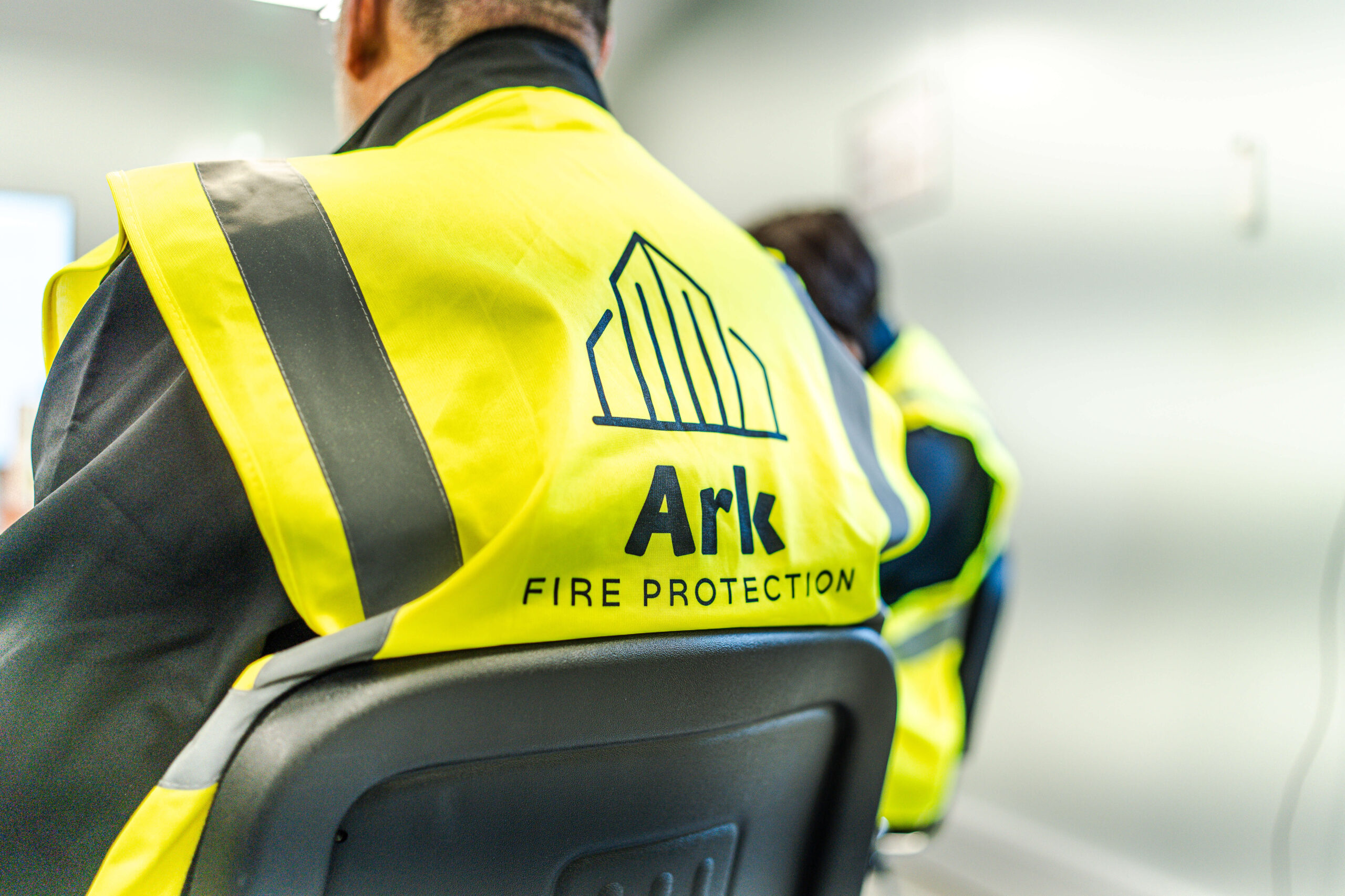
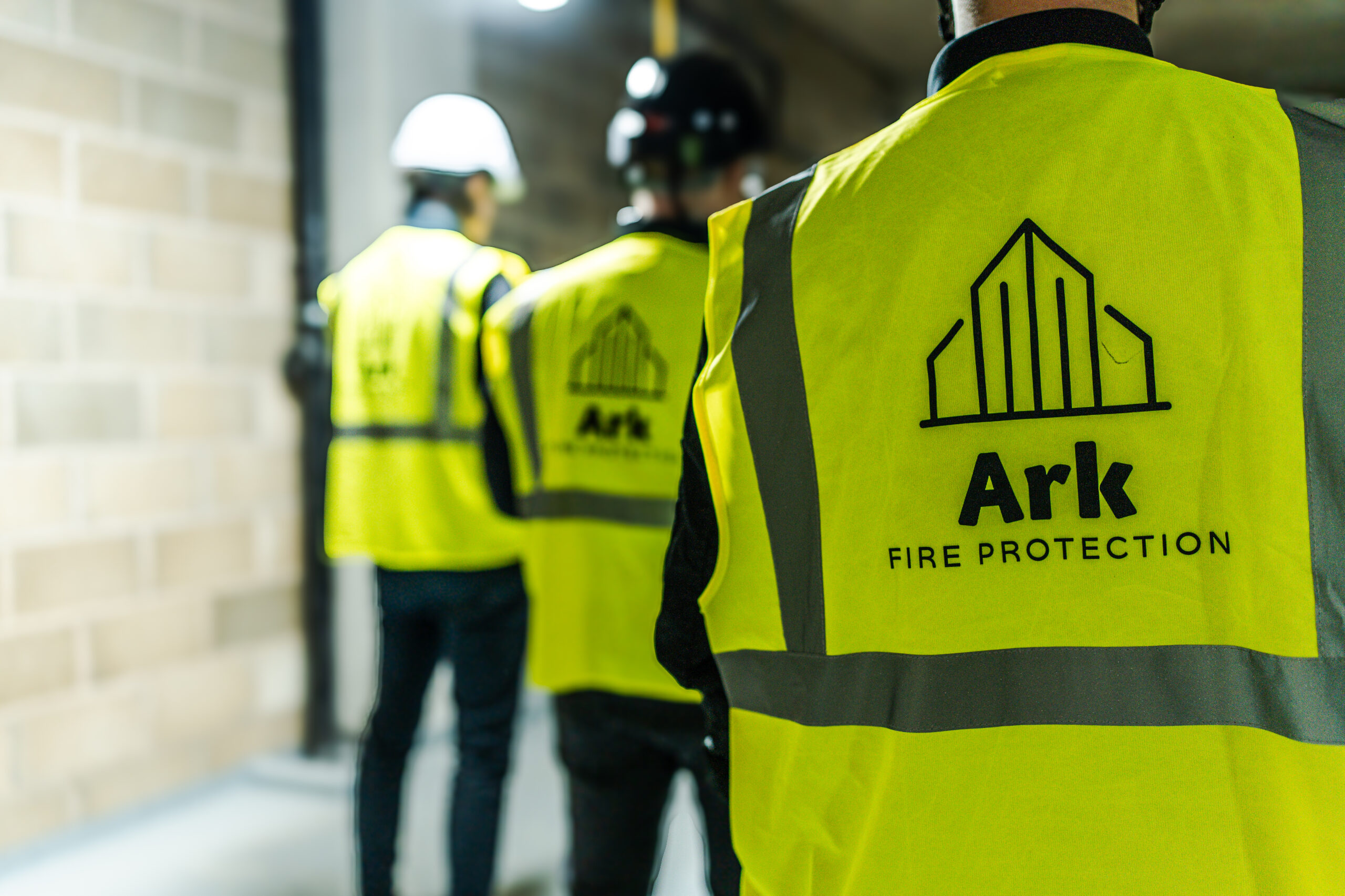
    image w text bg Ark Fire Protection Logo on high vis.

    Named frameworks we deliver through

    Ark is on, or delivers via, the major social housing procurement routes:


    • Fusion21 – passive fire protection
    • LHC – fire safety
    • Procurement for Housing (PfH)
    • CHIC
    • Pagabo
    • Crown Commercial Service (CCS)


    If you’re procuring through a framework Ark isn’t named on, talk to us – we’ll route the work through the right call-off mechanism.

    image w text bg Female Ark team member in high hat and safety equipment.

    Working in occupied homes - without disrupting residents

    Most of our social housing work happens inside lived-in buildings. Resident access is the single biggest programme risk on any flat entrance door programme, fire-stopping audit, or compartmentation remediation. We’ve built the operating model to deal with it:


    • Resident liaison officers on programmes over 100 properties
    • Letterhead, in-app, and door-knock advance notification – whichever the landlord prefers
    • Out-of-hours and weekend working where the programme calls for it
    • Clean finishes and pre/post photos for every door – so the resident has a record and the landlord has the evidence
    • Riverside House community decoration day – an example of how we give back to the estates we work on. Social value, not marketing.
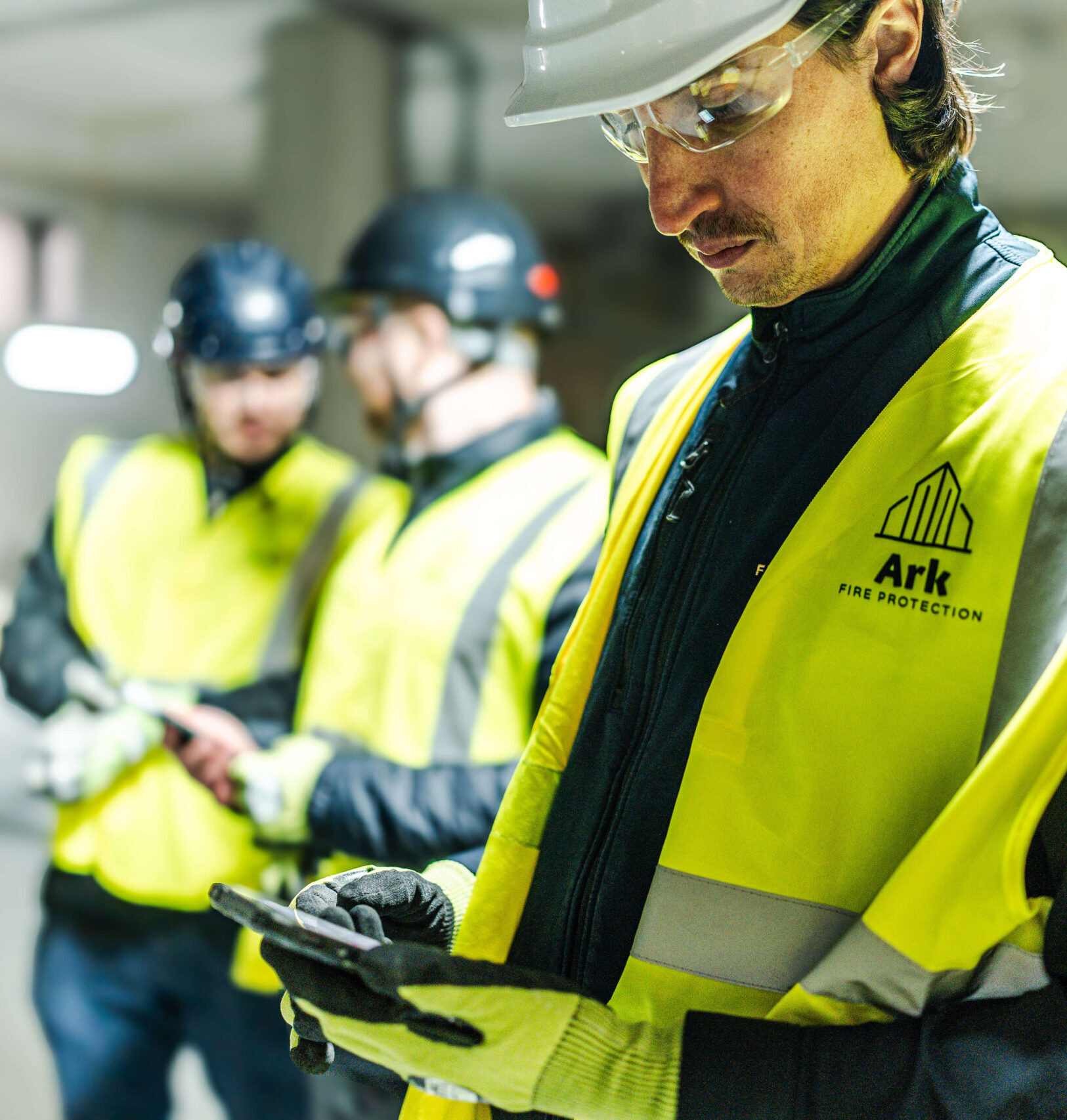
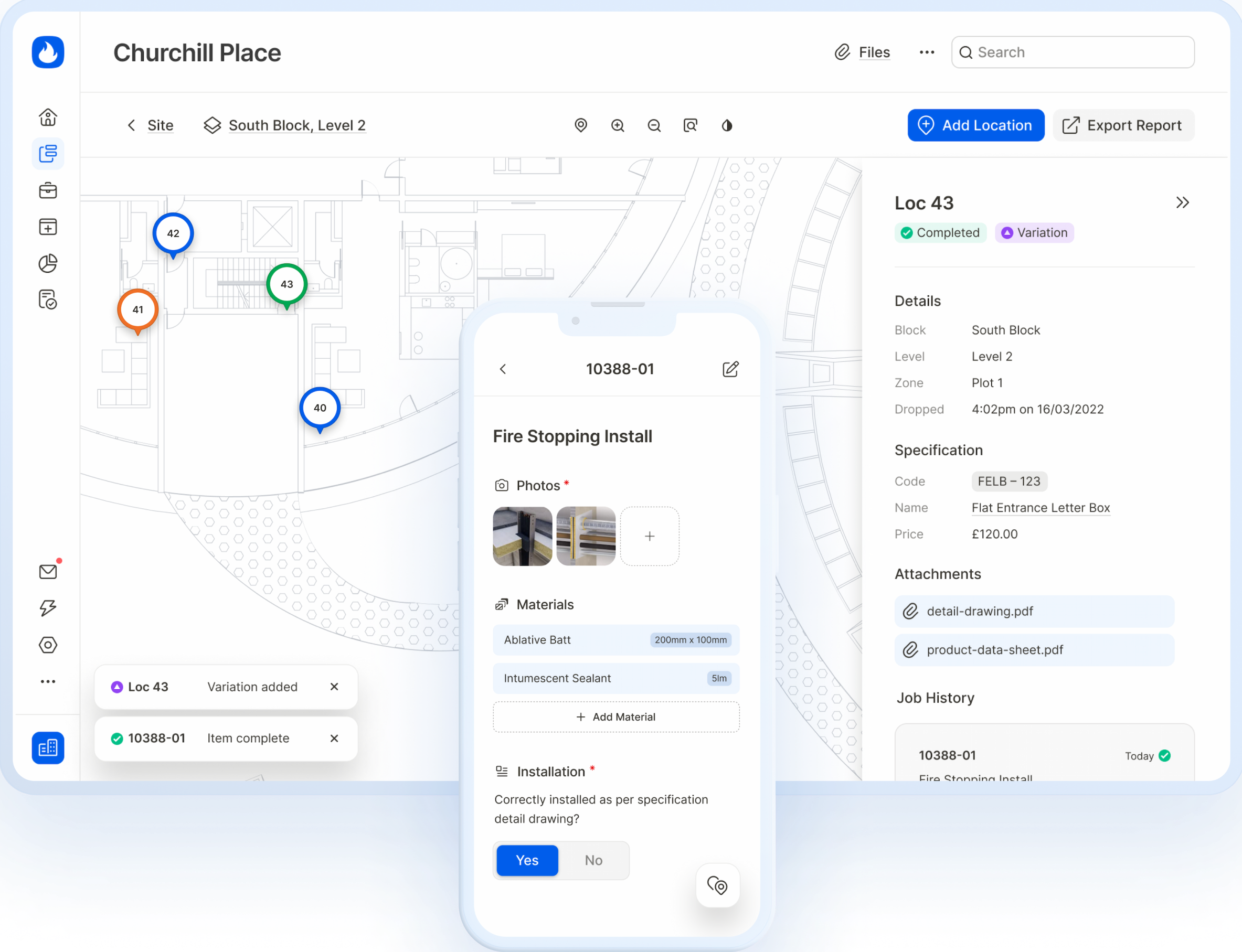
    image w text bg Man in Ark high vis checking works on One Trace app.

    What happens when passive fire protection goes wrong in social housing

    If your evidence is wrong


    A fire door without certification evidence cannot be relied on under the Fire Safety Order. The Responsible Person cannot demonstrate compliance. Under the Fire Safety (England) Regulations 2022, missing or incomplete door inspections in 11m+ buildings are a direct breach. Insurance cover can be withdrawn. The Regulator of Social Housing now has consumer-standards powers – and Awaab’s Law adds fixed deadlines on top.


    If there’s no QA on site


    Doors get fitted with the wrong seals, ironmongery, or frames – invalidating the fire rating. Cavity barriers get fitted with the wrong product, unsealed at penetrations, or omitted entirely. Defects are invisible until the next FRA, the next intrusive survey, or the next incident – by which time the cost has doubled and the residents have been disrupted twice.


    How Ark protects your safety case


    Third-party certified doorsets, FDIS- and FIRAS-accredited inspectors, and data-tagged installation records. Every door has a digital record the Responsible Person can produce on demand. Every fire stop is captured in Onetrace with product, installer, photo, and location. Every programme is delivered to the golden-thread standard the BSR expects of an HRB Accountable Person.

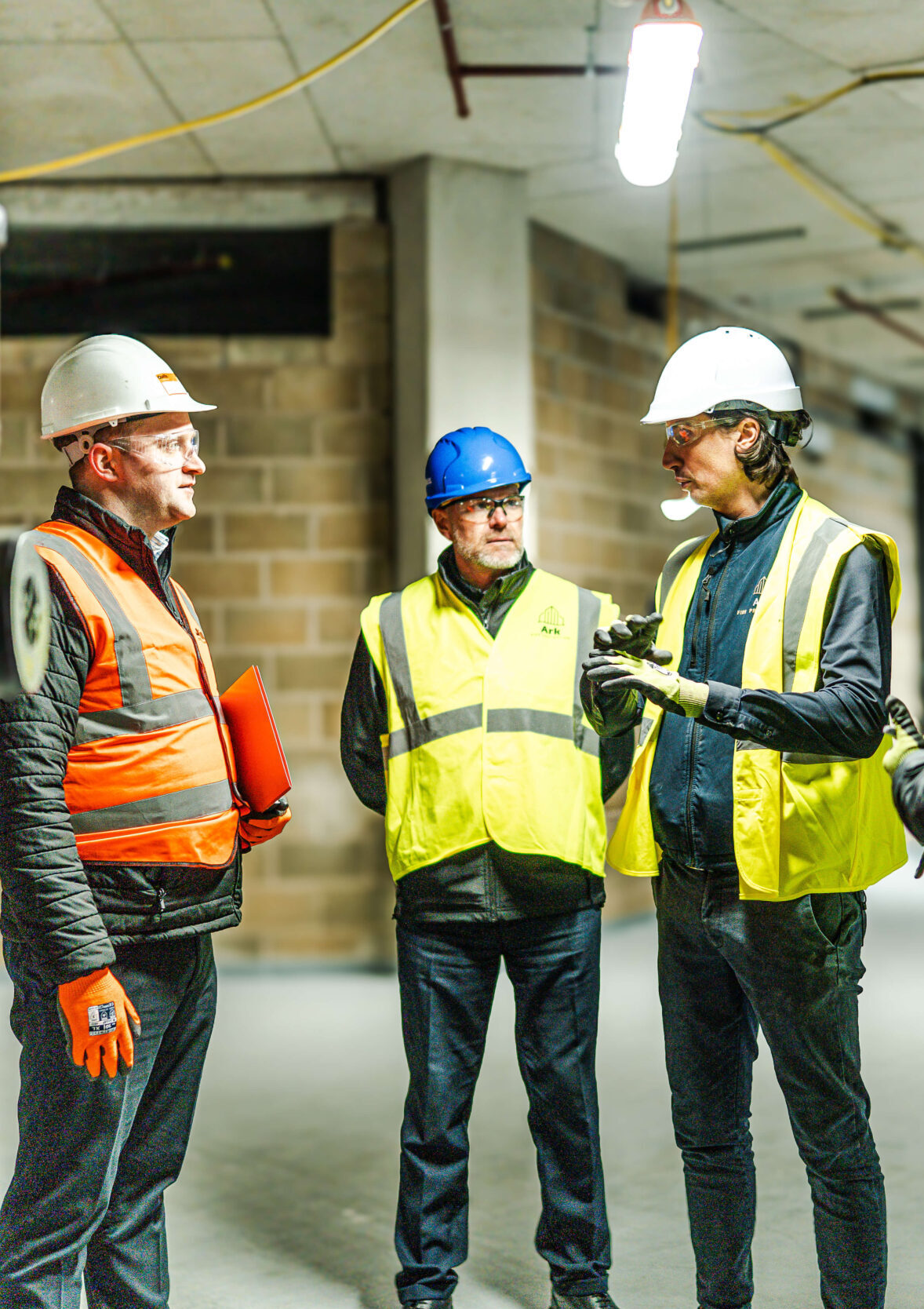
    image w text bg Ark Team discussing passive fire protection works on a building site.

    Tustin Estates - occupied-environment remediation at scale

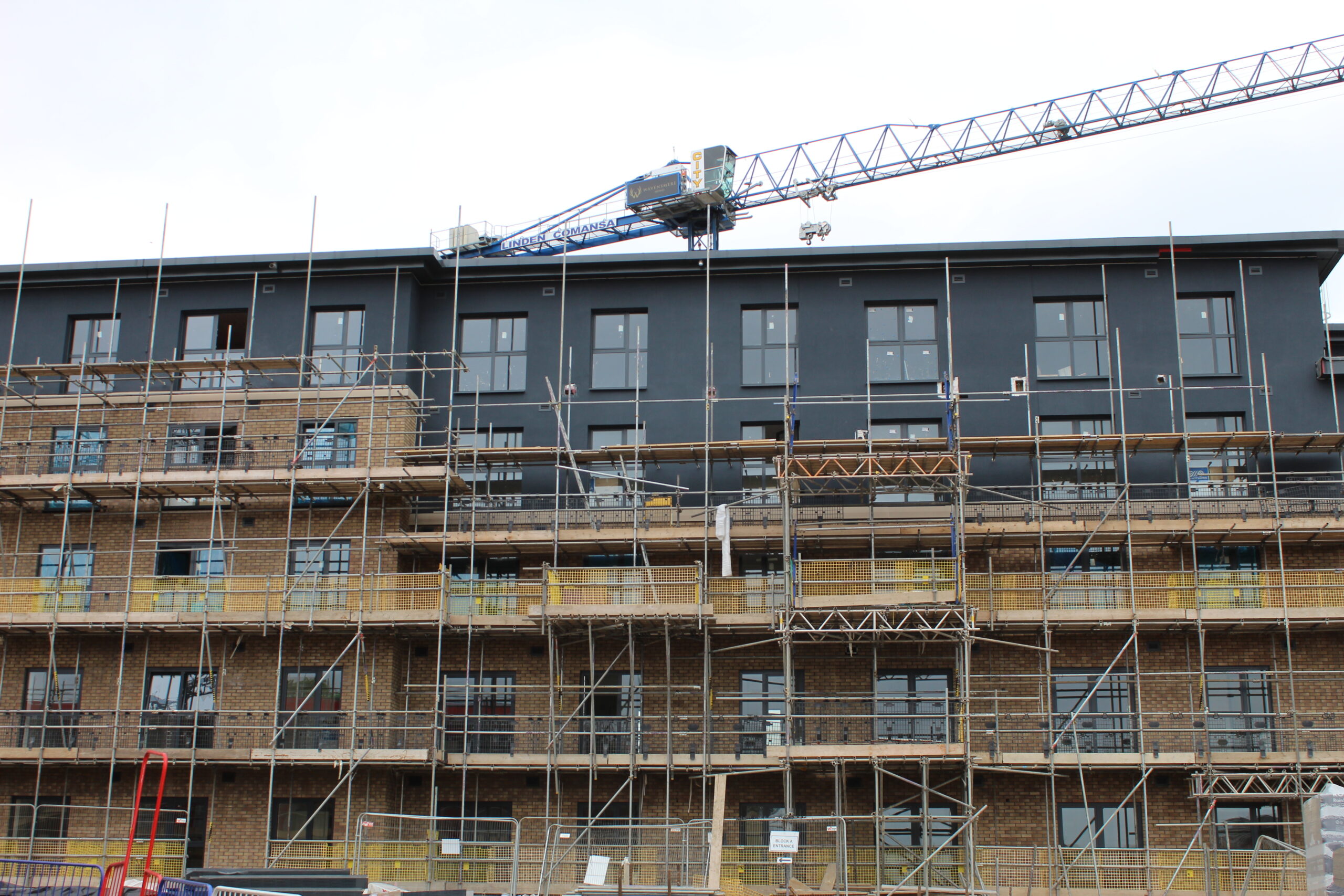
    Ark Fire Protection was entrusted with comprehensive fire stopping across Southwark Council’s Tustin Estates regeneration, a major scheme creating nearly 700 new homes through to anticipated completion in 2030. Our scope spanned compartmentation, service penetrations and fire-rated barriers throughout the residential blocks, sequenced around the wider construction programme to keep work on schedule. Every installation was captured in a full evidence pack — photographic records, product certification and inspection sign-offs traceable to each location. Throughout, we worked closely with the resident liaison team to minimise disruption and keep occupants informed at every phase.


    Read the case study.

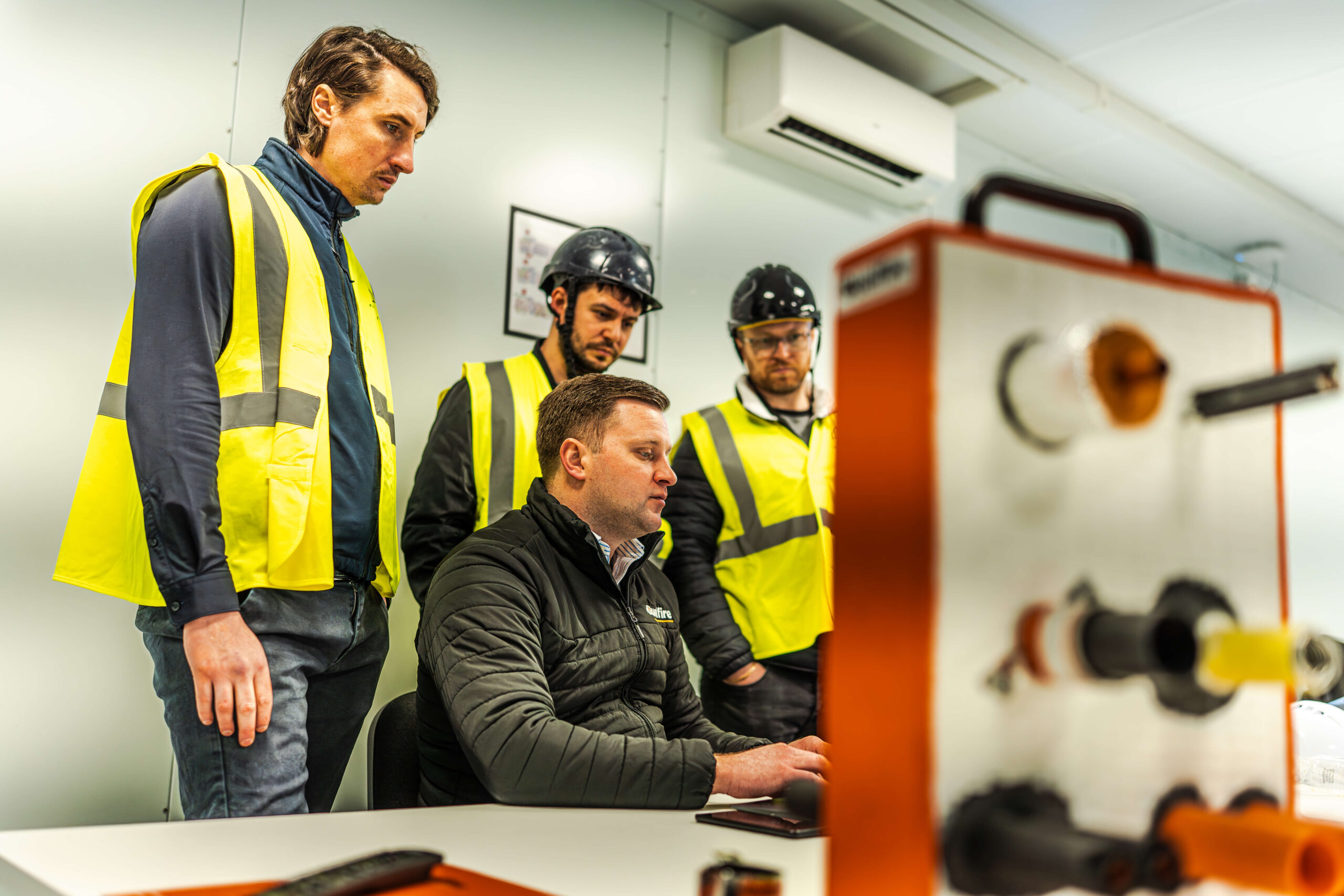
    image w text bg Ark team are updated on Quelfire's latest products

    Reliable & Efficient Passive Fire Protection Services for Social Housing

    In the wake of the Grenfell tragedy, the implementation of the Building Safety Act has brought much-needed focus to passive fire protection in the social housing sector. If you’re new to passive fire protection requirements, our complete guide to passive fire protection covers the core principles, compliance obligations, and what to look for in a contractor. Ensuring the safety and peace of mind for residents and communities is paramount, making passive fire protection an indispensable element in safeguarding lives and homes. For years, we have been the go-to choice for developers looking for reliable and efficient passive fire protection solutions for their social housing. Trust our team to deliver superior protection and peace of mind for your next project.

    Get in touch
    image w text bg

    Ark’s Passive Fire Protection Services for the Social Housing Sector

    Explore our wide range of passive fire protection services designed for social housing projects throughout the UK. Passive fire protection plays a vital role in ensuring both the safety of structures, facilitating efficient evacuation, and mitigating the risks associated with fire hazards. Browse our comprehensive selection of services listed below, and discover how we can effectively enhance safety measures in your project.

    Fire Stopping

    Fire stopping is a vital practice that aims to seal all openings in a building, effectively hindering the passage of fire, smoke, and heat between compartments. By establishing fire-resistant compartments that divide the building both vertically and horizontally, the potential spread of fire can be effectively contained. In the context of social housing, the implementation of fire stopping plays a critical role in minimising the devastating impact of fires.

    Find out more

    Fire Doors

    Fire doors are essential for creating compartmentation in social housing. At Ark Fire Protection, we provide a comprehensive range of fire door services. Whether you need a new door closer or a complete fire door upgrade, our team is equipped to deliver fire door maintenance and installation with third-party accreditation. Trust us to safeguard the safety and security of your building with fire doors.

    Find out more

    Intumescent Coatings

    Intumescent coatings offer a reliable and efficient solution for protecting social housing premises from structural damage. Our dedicated team conducts thorough testing on all our intumescent coatings to ensure compliance with EU standards. This unwavering commitment to quality gives our customers the assurance of advanced fire protection, effectively minimising potential threats to the structural integrity of their buildings.

    Find out more

    External Fire Barriers

    External Fire Barrier systems provide an effective solution for containing the spread of fire and smoke in roof and ceiling areas, as well as concealed voids in social housing buildings. These fire barrier systems are specifically designed for voids that are up to 10.5 metres in size. Vertical fire barrier systems offer exceptional insulation and integrity for up to 120 minutes, while friction fire barrier slabs provide reliable protection for up to 60 minutes.

    Find out more

    Fire Curtains

    Ark Fire Protection is a specialist in the installation and maintenance of fire curtains made from flexible fibre. Our curtains are meticulously crafted to be installed in difficult areas, such as ceiling voids or lofts, where structural supports are lacking and movement is possible. Whether you require fire curtains for integrity or insulation, we offer a comprehensive selection of options tailored to suit your specific needs.

    Find out more

    Partitions

    Fire partitioning is a critical safety measure implemented during the construction of social housing projects to effectively control the spread of fire. This involves the installation of internal walls and ceilings that confine the fire within specific areas or rooms of the building for a limited period of time. By containing the fire, this approach enables occupants to locate escape routes and minimises damage to the building, as only designated areas are affected.

    Find out more

    Fire Remedial Works

    Our FRA services for social housing involve reinstating or implementing passive fire protection measures to meet the required fire safety standards. We offer remedial works for fire risk assessments that aim to enhance your building’s safety levels, aligning with the latest guidelines and regulations.

    Find out more

    Get in touch!

    Whether you have questions, require further information, or would like to discuss your specific needs for passive fire protection solutions, our dedicated team is here to assist you.

    Contact Us

    Accredited Passive Fire Protection for Social Housing

    When it comes to Passive Fire Protection, you need a company that you can rely on. Ark Fire Protection is proud to be accredited by the leading industry bodies – ensuring that we always meet the highest standards of quality and safety, and that our customers can always expect a first-class service.


    We’re also ISO 9001 certified, meaning that our quality management systems are regularly audited and approved. So when you choose Ark Fire Protection, you can be confident that you’re making the best possible decision for your property.

    End-to-End Social Housing Passive Fire Protection Solutions

    We offer complete end-to-end solutions for passive fire protection in social housing. Our services encompass every aspect, from design and installation to maintenance and remedial works. With our comprehensive approach, your building will be equipped with cutting-edge PFP systems that meet the highest industry standards. You can trust us to provide a reliable and all-encompassing solution for safeguarding your premises against fire hazards. Get in touch with us today to discover more about our services and how we can help ensure the safety of your social housing project.

    image w text bg

    Great social housing passive fire protection projects start with great technology

    For social landlords, Onetrace turns every door inspection, every fire stop, every penetration into a defensible digital record that maps to the Fire Safety Order, the FS(E)R 2022, and the Building Safety Act in one place. The Responsible Person can produce evidence on demand. The Accountable Person can prove the safety case. The Asset Manager can plan the next remediation from real data, not a spreadsheet of guesses.

    Get in touch

    Fire Stopping Regulations for Social Housing

    According to Approved Document B, Volume 1 (Dwellings), the Building Safety Act 2022 and the Fire Safety (England) Regulations 2022, social housing buildings must prevent the spread of fire while also meeting other requirements:


    • Flat entrance doors must comply with FD30S fire door specifications and be maintained in full working order as required by the Fire Safety (England) Regulations 2022
    • Compartmentation between dwellings and common areas must be inspected and remediated as part of the registered provider’s ongoing safety obligations
    • Service penetrations in party walls and floor and ceiling assemblies must be fire stopped using tested systems appropriate to the element rating
    • For buildings of 18 metres or more, landlords must comply with Building Safety Act 2022 duties including resident engagement, safety case preparation and registration with the Building Safety Regulator


    The documents and their amendments detail the proper procedures for implementing fire stopping measures. Our team of experts is ready to offer valuable assistance throughout this process, ensuring the utmost protection for social housing residents.

    image w text bg Regulations

    What Is Passive Fire Protection in Social Housing and Why Is It Important?

    Passive fire protection in social housing is the built-in fire safety infrastructure of a residential block – compartmentation walls and floors, fire doors, fire stopping around services, cavity barriers, and protective coatings. Unlike active fire systems, passive fire protection works without activation: it contains a fire to a single flat or compartment long enough for residents to evacuate and the fire service to respond.


    In social housing it carries a second function. It’s the evidence the landlord uses to prove duty-of-care under the Building Safety Act, the Fire Safety Order, and the Fire Safety (England) Regulations 2022. Without that evidence – product certification, install records, inspection logs – the regulatory exposure is the same as having no passive fire protection at all.

    image w text bg 3 members of the Ark team on site wearing branded high-vis jackets.

    Benefits of Passive Fire Protection in Social Housing

    A defensible safety case for the Accountable Person


    Every HRB in your portfolio needs a safety case report the BSR can review on demand. Properly installed and evidenced passive fire protection is the single largest body of evidence inside that report.


    Compliance with the FS(E)R 2022 inspection regime


    Monthly common area door checks and quarterly flat entrance door checks on 11m+ buildings are statutory. Digitally captured inspection records – by data-tagged doorset – turn a statutory obligation into a recurring operational rhythm rather than a quarterly scramble.


    Minimum disruption to residents


    Resident liaison, advance notification, out-of-hours working, and clean finishes – built into how every Ark programme is scoped. Residents get a record, the landlord gets the evidence, and the asset team gets the throughput.


    Audit trail for the Regulator of Social Housing and the BSR


    Onetrace produces a structured digital record of every penetration, door, and barrier – product, installer, photo, location, sign-off. The Asset Manager can produce evidence on demand for the Regulator, the BSR, the insurer, or the FRA assessor.

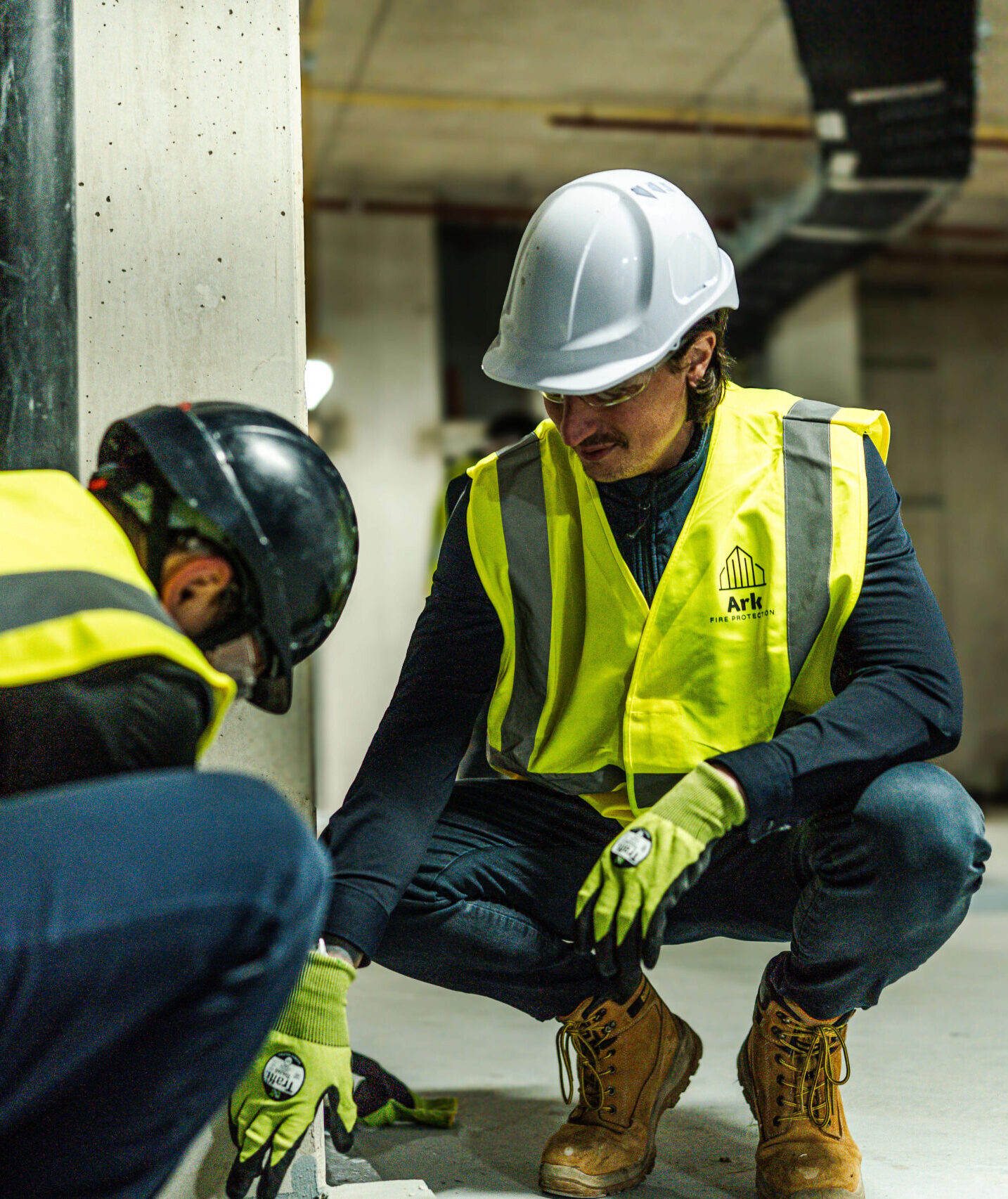
    image w text bg Ark team members crouching to inspect works

    What Is Passive Fire Protection in Social Housing and Why Is It Needed?

    Passive fire protection in social housing refers to the fire-resisting measures built into a building’s structure that contain fire and smoke, protect escape routes, and hold up key structural elements long enough for residents to reach safety – without anything needing to be switched on. These measures include compartment walls and floors, fire doors, fire stopping around service penetrations, cavity barriers, fire-rated partitions, and fire-resistant coatings on structural steel.


    Social housing means occupied buildings where people live day and night, including residents who may need more time or assistance to evacuate. That is the reason the work matters: good passive fire protection keeps a fire contained close to where it starts, giving people time to get out. We work inside occupied social housing every day and treat it accordingly – every installation FIRAS-certified and evidenced through OneTrace, so the protection can be proven, not just promised.

    image w text bg

    Which Regulations Apply to Passive Fire Protection in Social Housing?

    Fire safety in social housing is governed by several overlapping laws. Building work must meet Approved Document B of the Building Regulations. Once a building is occupied, the Regulatory Reform (Fire Safety) Order 2005 places ongoing duties on the responsible person – usually the housing association or local authority – to assess and manage fire risk and keep fire safety measures in good order.


    The Building Safety Act 2022 introduced a stricter regime for higher-risk buildings (generally those at least 18 metres tall or with at least seven storeys), overseen by the Building Safety Regulator. Responsible persons must maintain a “golden thread” of accurate building information, including how passive fire protection has been installed and maintained. The Fire Safety Act 2021 and Fire Safety (England) Regulations 2022 add further duties, and the Social Housing (Regulation) Act 2023 strengthened the standards residents can expect from their landlord.


    The key regulations affecting passive fire protection in social housing are:


    • Approved Document B – fire safety requirements for building work and alterations.
    • Regulatory Reform (Fire Safety) Order 2005 – ongoing fire safety duties on the responsible person.
    • Fire Safety Act 2021 – confirms the Order covers the structure, external walls and flat entrance doors.
    • Fire Safety (England) Regulations 2022 – duties including regular fire door checks in the common parts of buildings above 11 metres.
    • Building Safety Act 2022 – the higher-risk building regime and the golden thread of information.

    • Social Housing (Regulation) Act 2023 – strengthened regulation of social landlords.


    We map every job back to these duties: installing to tested details, then documenting and photographing the work through OneTrace so responsible persons have the evidence trail the regulations now expect.

    image w text bg

    Working With Leading Manufacturers

    Social Housing Passive Fire Protection FAQs

    Who is the Accountable Person under the Building Safety Act?

    The Accountable Person is the organisation or individual legally responsible for managing building safety risks in a higher-risk residential building. For most social housing HRBs, that’s the landlord – the housing association, ALMO, or local authority. The Accountable Person produces the safety case report, registers the building with the BSR, and answers to the regulator.

    What does the Fire Safety (England) Regulations 2022 require for fire doors?

    In residential buildings over 11m, monthly checks of fire doors in common areas and quarterly checks of flat entrance doors. Missing or incomplete inspections are a direct breach of the regulations and a fire safety risk in their own right. Ark delivers the inspection regime to FDIS-accredited standards with digital records by doorset.

    How does Ark deliver passive fire protection in occupied buildings?

    Resident liaison officers, advance notification, out-of-hours where appropriate, infection control where relevant, and clean finishes as a default. Programme planning starts with a resident-access strategy, not a unit-rate spreadsheet.

    Can Ark deliver against PAS 9980 / FRAEW remediation programmes?

    Yes. Ark works alongside FRAEW assessors and external wall consultants on PAS 9980-led remediation – particularly the cavity barrier and fire stopping interfaces where FRAEW findings most commonly require remediation. Onetrace records every barrier and every penetration, mapping evidence back to the FRAEW action register.
    What's the relationship between the Fire Safety Order and the Building Safety Act?

    The Fire Safety Order (RRO 2005) is the day-to-day fire safety duty on the Responsible Person – applies to every non-domestic premises and common parts of residential blocks. The Building Safety Act sits on top for HRBs (18m+ or 7 storeys+ residential), adding Accountable Person duties, safety case requirements, and BSR oversight.

    Does Awaab's Law affect passive fire protection work?

    Yes – indirectly. Awaab’s Law imposes fixed timeframes for landlords responding to known hazards in social housing. Where a fire risk assessment, FRAEW, or routine inspection identifies a passive fire protection defect, the clock now starts. Slow remediation is no longer a budget problem, it’s an enforcement problem.

    What passive fire protection measures are used in social housing?

    Common measures include compartment walls and floors, fire doors to flats and communal areas, fire stopping around pipes and cables, cavity barriers, fire-rated partitions, and fire-resistant coatings on structural steel. Together they contain fire and smoke and protect escape routes.

    Who is responsible for passive fire protection in social housing?

    The responsible person – usually the housing association, local authority or managing agent – is accountable under the Regulatory Reform (Fire Safety) Order 2005. The Building Safety Act 2022 adds further duties for higher-risk residential buildings, including keeping accurate fire safety information.

    How often should passive fire protection be inspected in social housing?

    Passive fire protection should be checked at least annually. Under the Fire Safety (England) Regulations 2022, responsible persons for buildings above 11 metres must also carry out regular checks of fire doors in the common parts. Any refurbishment or change to the building should trigger a reassessment.

    Can passive fire protection be installed in occupied social housing?

    Yes. We carry out most works in occupied buildings, phasing them around residents and communal access so escape routes stay available throughout.

    What is the “golden thread” in social housing fire safety?

    The golden thread is the requirement under the Building Safety Act 2022 to hold accurate, accessible information about a higher-risk building’s design, construction and safety measures – including how its passive fire protection was installed and maintained – so risks can be managed throughout the building’s life.

    What happens if passive fire protection is missing or defective?

    Gaps or defects can let fire and smoke spread beyond the compartment of origin, putting residents at risk and exposing the landlord to enforcement action. Defects found in a fire risk assessment should be remediated promptly and documented – which is exactly what we record on every job.