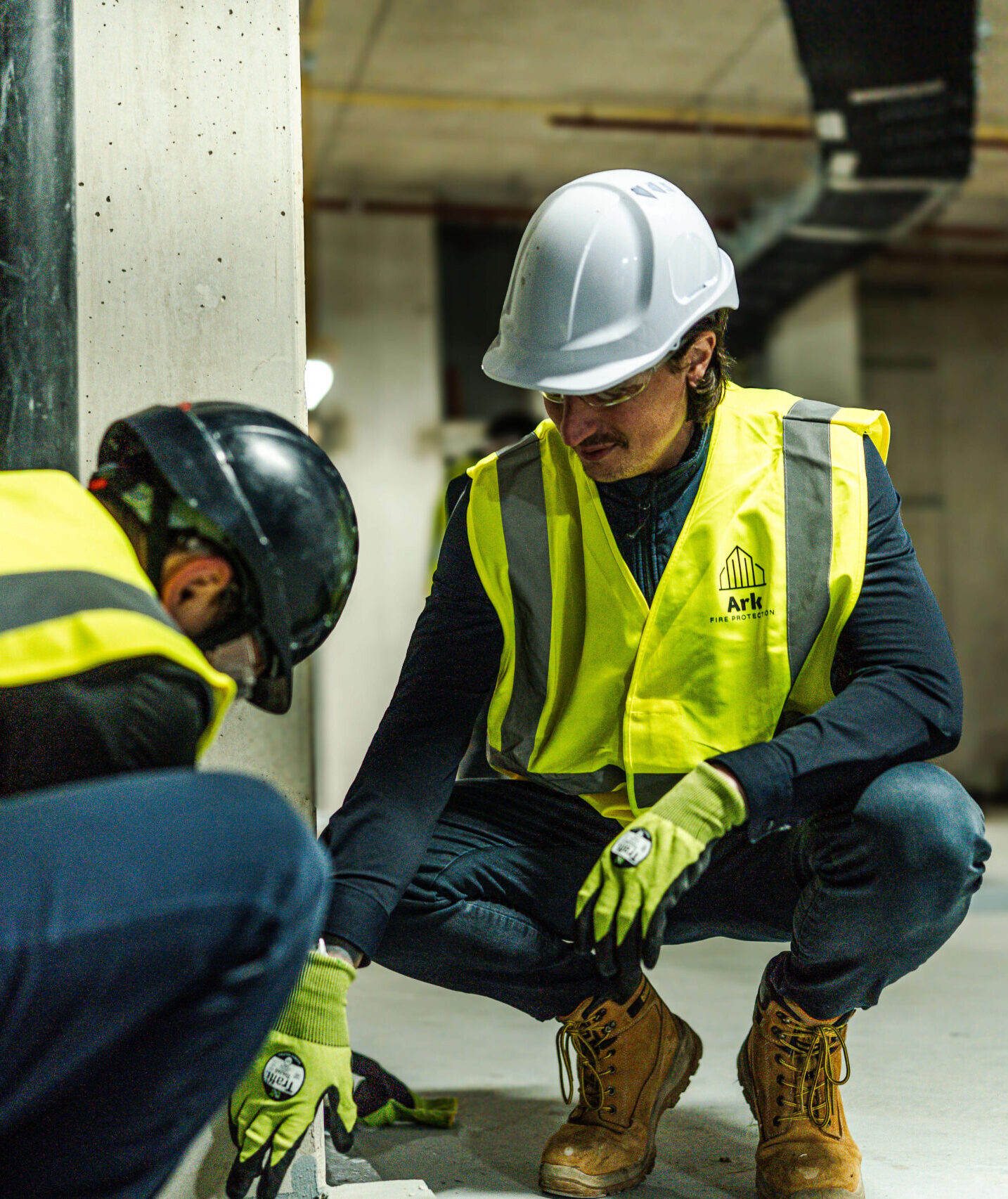
Landscape Image of Ark & Quelfire in safety gear.

5-Star Passive Fire Protection Services

Passive Fire Protection Services

Leading the specification and installation of Passive Fire Protection Services across the UK.

facilities line gold member logo
ASFP Logo

UK-Wide Passive Fire Services

Our team at Ark Fire Protection are able to service customers across the whole of the UK, providing expert passive fire services to a range of industries and buildings.


We specialise in keeping buildings fully compliant with fire safety regulations. Our skilled team offers a wide range of passive fire protection solutions designed to meet the latest standards effectively.


Under the 2020 amendments to the Building Regulations Act 2010 (Fire Safety, Volume 1: Dwellings), buildings must address several key fire safety requirements:


  • Preventing the premature collapse of structural elements.
  • Ensuring sufficient spacing between and within buildings to reduce fire spread risks.
  • Installing automatic fire suppression systems where necessary.
  • Limiting the spread of fire and smoke within cavities.


These updates also emphasise proper installation of passive fire protection measures. With our expertise, Ark Fire Protection can guide you through every step, ensuring your building is as safe and compliant as possible.

Get in touch
image w text bg Ark team members crouching to inspect works

Ark's Fire Protection Services

Browse our complete range of passive fire protection services available for our clients across the UK.

Fire Stopping

Fire stopping can be defined as the sealing of any opening to prevent fire, smoke and heat from passing through building compartments. The spread of fire, smoke and heat can be contained by creating fire resistant compartments which segment a building both vertically and horizontally. It is essential that buildings implement fire stopping to restrict fire spread.

Learn more

Fire Doors

Fire doors are a serious contender in the main implementation of creating compartmentation in a building and they are widely brushed over. At Ark Fire Protection we provide a number of services with fire doors, whether you are looking for a new door closer or a full fire door upgrade we can offer fire door maintenance with third party accreditation.

Learn more

Intumescent Coatings

Intumescent coatings for structural steels are a proven and effective method of protecting buildings from the risk of structural damage. All of the intumescent coatings used by Ark Fire Protection have been rigorously tested, meeting EU standards, giving confidence to our customers of advanced protection from fires which may cause threats to the structural elements of buildings.

Learn more

External Fire Barriers

External Fire Barrier systems are a solution to preventing the spread of fire and smoke within roof and ceiling areas, and unseen voids in buildings. Fire barrier systems are suitable for voids located up to 10.5 metres. Vertical fire barrier systems achieve both insulation and integrity periods up to 120 minutes whilst friction fire barrier slabs can provide up to 60 minutes of protection.

Learn more

Fire Curtains

Intumescent coatings for structural steels are a proven and effective method of protecting buildings from the risk of structural damage. All of the intumescent coatings used by Ark Fire Protection have been rigorously tested, meeting EU standards, giving confidence to our customers of advanced protection from fires which may cause threats to the structural elements of buildings.

Learn more

Partitions

External Fire Barrier systems are a solution to preventing the spread of fire and smoke within roof and ceiling areas, and unseen voids in buildings. Fire barrier systems are suitable for voids located up to 10.5 metres. Vertical fire barrier systems achieve both insulation and integrity periods up to 120 minutes whilst friction fire barrier slabs can provide up to 60 minutes of protection.

Learn more

Fire Remedial Works

Fire remedial works encompass a range of manual services aimed at addressing passive fire protection deficiencies in a building’s framework. Our services involve the reconstitution or re-implementation of a range of passive fire protection measures that do not currently meet the required fire safety standards. Our fire risk assessment remedial works are designed to elevate your building’s fire safety standards to the appropriate level – meeting current guidelines and regulations.

Learn more

Get in touch!

Whether you have questions, require further information, or would like to discuss your specific needs for passive fire protection solutions, our dedicated team is here to assist you.

Contact Us

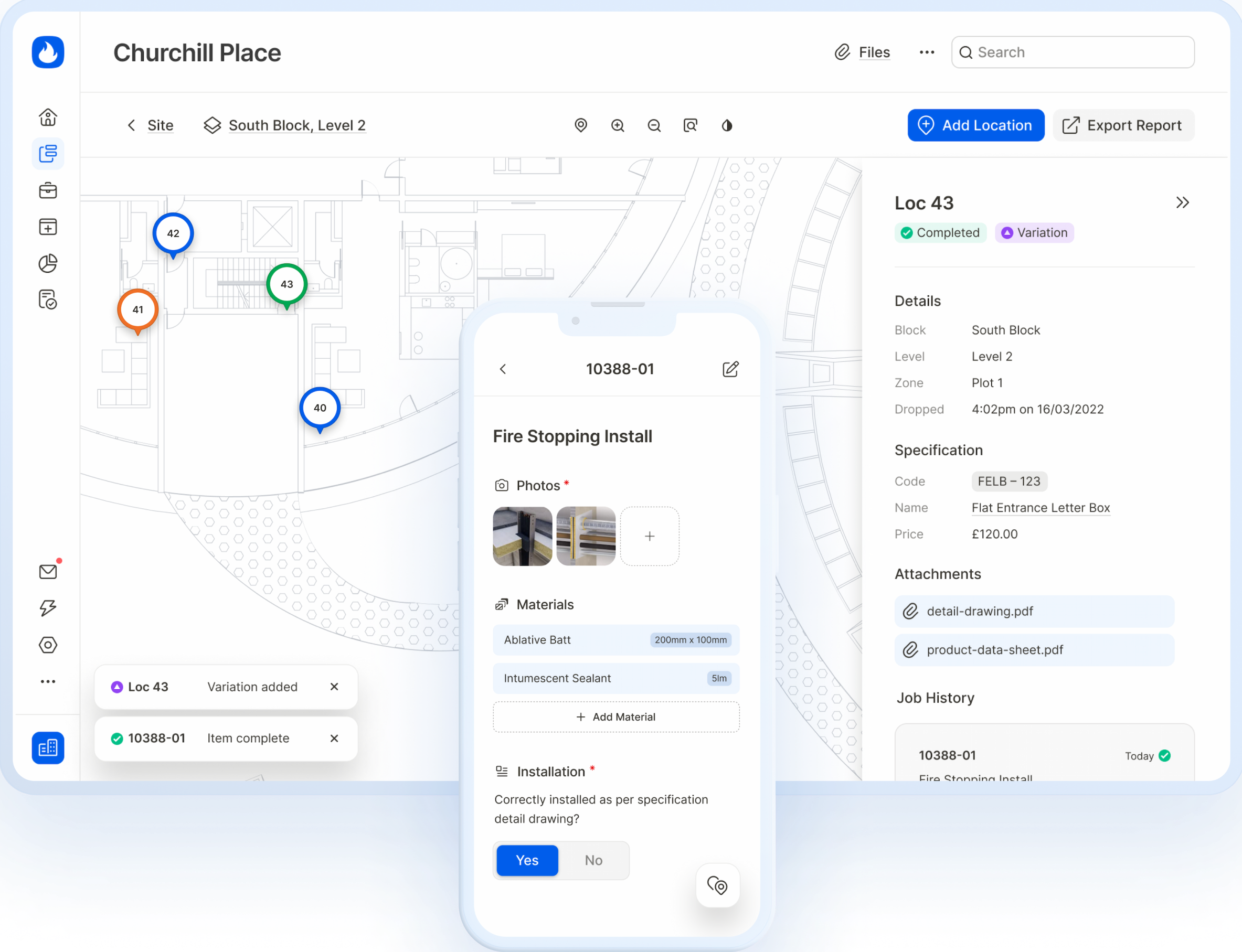
Great projects start with great technology

Onetrace is a powerful cloud-based application that is supporting Ark Fire Protection to raise standards across the fire protection industry.


Providing Ark with one system to capture, monitor, review and report on all fire protection work being conducted in real time.

Get in touch

Ark Fire Protection

Ark Fire Protection has established a reputation as a leading passive fire protection specialist across Greater London and the United Kingdom.


Ark Fire Protection is a leading contractor with unrivalled expertise, providing solutions and services in the specification and installation of passive fire protection systems.


Our head office is based in Peterborough, with strategic locations in London, Birmingham, Leeds, and Manchester.

image w text bg Ark logo on high vis.

What Is Passive Fire Protection and Why It Matters

Passive fire protection refers to the elements of a building’s construction that are specifically designed to resist the spread of fire and smoke and to maintain structural stability for a defined period. Unlike active systems, passive fire protection does not rely on activation, power, or human intervention. It’s built into the fabric of the building and is expected to perform continuously throughout the building’s life.


In the event of a fire, effective passive fire protection slows fire development, protects escape routes, and prevents early structural collapse. This additional time is critical. It allows occupants to evacuate safely and gives the fire and rescue service the opportunity to respond and contain the incident. In the UK, passive fire protection is fundamental to compliance with Building Regulations Approved Document B and forms a core part of the duties placed on the responsible person under the Regulatory Reform (Fire Safety) Order 2005.

image w text bg

How Passive Fire Protection Systems Work Together

Passive fire protection should always be considered as a coordinated system rather than a collection of individual products. Fire resisting walls and floors create compartments that divide a building into manageable fire zones, limiting how far fire and smoke can spread. These compartments are only effective when all potential weak points are properly protected.


Fire doors, fire barriers, cavity barriers, and fire stopping systems are installed at openings, service penetrations, and concealed voids to maintain the integrity of compartment lines. Fire resistant coatings and linings protect load bearing elements such as steel and timber, delaying structural failure and reducing the risk of collapse during a fire.


When correctly specified, installed, and maintained, these systems work together to preserve escape routes, protect critical areas, and reduce damage to adjacent spaces. If any one element is missing, damaged, or poorly installed, fire and smoke can bypass compartmentation, significantly increasing risk. This is why inspection, maintenance, and remedial works are just as important as initial installation.

image w text bg

Application Areas for Passive Fire Protection

Commercial buildings

Offices, retail spaces, and mixed use developments often have open layouts, shared escape routes, and frequent alterations. Passive fire protection helps maintain compartmentation around cores, stairwells, risers, and service penetrations, reducing risk during both working hours and out of hours occupancy.

Residential and high risk housing

In flats, apartment blocks, and social housing, passive fire protection is critical to preventing fire spread between dwellings. Compartmentation around individual flats, protected corridors, and stairwells supports safe evacuation strategies and reduces risk to sleeping occupants.

Healthcare environments

Hospitals and care facilities rely heavily on passive fire protection to support phased or progressive evacuation. Fire resisting partitions, doors, and barriers allow staff to move patients safely while containing fire and smoke within defined areas.
Education buildings

Schools, colleges, and universities present challenges due to high occupancy, complex layouts, and frequent movement. Passive fire protection plays a key role in protecting escape routes and limiting fire spread across teaching spaces and accommodation areas.

Industrial and warehouse facilities

Large floor areas, high fire loads, and extensive services make passive fire protection essential in industrial settings. Fire stopping, barriers, and structural protection help manage rapid fire development and protect adjacent areas and critical infrastructure.

New builds and refurbishments

During construction and refurbishment, passive fire protection must be correctly integrated and reinstated following any service installations or alterations. Even minor works can compromise fire resistance if penetrations are left unsealed or incorrectly repaired.

Our Accreditations

When it comes to Passive Fire Protection, you need a company that you can rely on. Ark F&P is proud to be accredited by the leading industry bodies – ensuring that we always meet the highest standards of quality and safety, and that our customers can always expect a first-class service.


 

We’re also ISO 9001 certified, meaning that our quality management systems are regularly audited and approved. So when you choose Ark Fire Protection, you can be confident that you’re making the best possible decision for your property.

Working With Leading Manufacturers

Passive Fire Protection FAQs

What does passive fire protection actually do in a fire?

Passive fire protection slows the spread of fire and smoke, seals cavities and openings, and maintains compartmentation within a building. This provides vital time for occupants to escape safely and helps protect the structure during the early stages of a fire.

How is passive fire protection assessed during a fire risk assessment?

A fire risk assessment will review compartmentation, fire doors, fire stopping, and barriers to identify defects, damage, or non compliant installations. Any issues identified should be addressed through remedial works to restore fire resistance.

How often should passive fire protection systems be inspected?

Inspection frequency depends on building type and risk, but most systems should be checked at least annually and after any building works. High risk or heavily used buildings may require more frequent inspections.

Who is responsible for maintaining passive fire protection?

The responsible person, usually the building owner, employer, or managing agent, is legally responsible for ensuring passive fire protection systems are maintained, documented, and kept in effective working order.

Can passive fire protection be upgraded in existing buildings?

Yes. Passive fire protection can be upgraded or retrofitted to address defects, regulatory changes, or risks identified during inspections or fire risk assessments. This often involves targeted remedial works rather than full structural replacement.