









Residential Passive Fire Protection

Residential properties should be equipped with fire protection systems that comply with building regulations and relevant British Standards. At Ark Fire Protection, we specialise in providing industry-leading passive fire protection solutions for residential constructions. Our goal is to ensure the safety and compliance of buildings and their occupants.

citation approved certificate
Constructionline Gold Certification
Firas certification
Ark ISO 9001 - British Assessment Bureau Certificate
CHAS cert exp
Acclaim certification logo
British Assessment Bureau Certificate
SafeContractor Certificate
facilities line gold member logo
ASFP Logo

    Reliable Residential Passive Fire Protection for Your Properties

    At Ark Fire Protection, our team of experts offers an extensive range of passive fire protection solutions for residential properties. From fire-rated walls and doors to fire-stopping and compartmentation, we provide reliable systems designed to delay or prevent the spread of fire and smoke. This allows occupants valuable time to safely evacuate the building. For years, we have been the trusted choice for developers seeking efficient and dependable passive fire protection solutions for residential buildings. Count on our team to deliver superior protection and peace of mind for your next project.

    Get in touch

    Ark’s Residential Passive Fire Protection Services

    Explore our comprehensive range of passive fire protection services for residential projects throughout the UK. Passive fire protection serves two essential purposes: enhancing structural safety for efficient evacuation and mitigating the risks associated with fire hazards. Browse our selection of services below to discover how we can optimise safety in your project.

    fire stopping logo

    Fire Stopping

    Fire stopping is a vital practice in building safety. It entails sealing all openings to prevent the spread of fire, smoke, and heat between different compartments. By establishing fire-resistant compartments vertically and horizontally, the potential damage caused by a fire can be contained. Implementing fire stopping is particularly crucial in residential constructions to limit the impact of fire incidents.

    Find out more
    fire door logo

    Fire Doors

    Fire doors play a vital role in establishing compartmentation in residential premises. We provide a comprehensive range of fire door services – whether you need a new door closer or a complete fire door upgrade, our team is equipped to deliver fire door maintenance with third-party accreditation. Rest assured, we prioritise the safety and security of your building.

    Find out more
    intumescent coating logo

    Intumescent Coatings

    Intumescent coatings offer a tried and tested solution to protect residential buildings from structural damage. Our team conducts thorough testing on all our intumescent coatings to ensure compliance with EU standards. This unwavering dedication to quality gives our customers the assurance of advanced fire protection, effectively mitigating potential threats to the structural integrity of their buildings.

    Find out more
    fire barrier logo

    External Fire Barriers

    External Fire Barrier systems provide an effective solution to prevent the spread of fire and smoke in roof and ceiling areas, as well as concealed voids in residential buildings. These specially designed fire barrier systems are suitable for voids located up to 10.5 metres. Vertical fire barrier systems offer impressive insulation and integrity periods of up to 120 minutes, while friction fire barrier slabs provide reliable protection for up to 60 minutes.

    Find out more
    fire curtain logo

    Fire Curtains

    We specialise in the installation and maintenance of fire curtains made from flexible fibres. These curtains are specifically designed for installation in challenging areas or spaces without structural supports, such as ceiling voids or lofts, where movement may occur. Whether you require fire curtains for integrity or insulation, we provide a comprehensive range of options tailored to meet your specific needs.

    Find out more
    partitions logo

    Partitions

    Fire partitioning is a critical safety measure implemented during residential construction projects to effectively limit the spread of fire. This involves installing internal walls and ceilings that confine the fire within specific areas or rooms of the building for a limited period. By containing the fire, this approach enables occupants to locate escape routes and minimises damage to the building, as only designated areas are affected.

    Find out more
    fire rememdial work logo

    Fire Remedial Works

    Our FRA services for residential constructions involve reinstating or implementing passive fire protection measures that do not meet the required fire safety standards. We offer remedial works for fire risk assessment, designed to elevate your building’s fire safety standards to the necessary levels, in accordance with the latest regulations.

    Find out more
    get in touch logo

    Get in touch!

    Whether you have questions, require further information, or would like to discuss your specific needs for passive fire protection solutions, our dedicated team is here to assist you.

    Contact Us

    Accredited Residential Passive Fire Protection Services

    When it comes to Passive Fire Protection, you need a company that you can rely on. Ark Fire Protection is proud to be accredited by the leading industry bodies – ensuring that we always meet the highest standards of quality and safety, and that our customers can always expect a first-class service.


    We’re also ISO 9001 certified, meaning that our quality management systems are regularly audited and approved. So when you choose Ark Fire Protection, you can be confident that you’re making the best possible decision for your property.

    End-to-End Residential Passive Fire Protection Solutions

    We specialise in complete end-to-end solutions for passive fire protection in residential constructions. Our services encompass a wide range of offerings including design, installation, maintenance, and remedial works. By adopting a comprehensive approach, we ensure that your building is equipped with state-of-the-art PFP systems that adhere to the highest industry standards. You can rely on us to provide a dependable and all-encompassing solution for safeguarding your premises against fire hazards. Get in touch with us today to discover more about our services and how we can assist in ensuring the safety of your residential project.

    image w text bg

    Great residential passive fire protection projects start with great technology

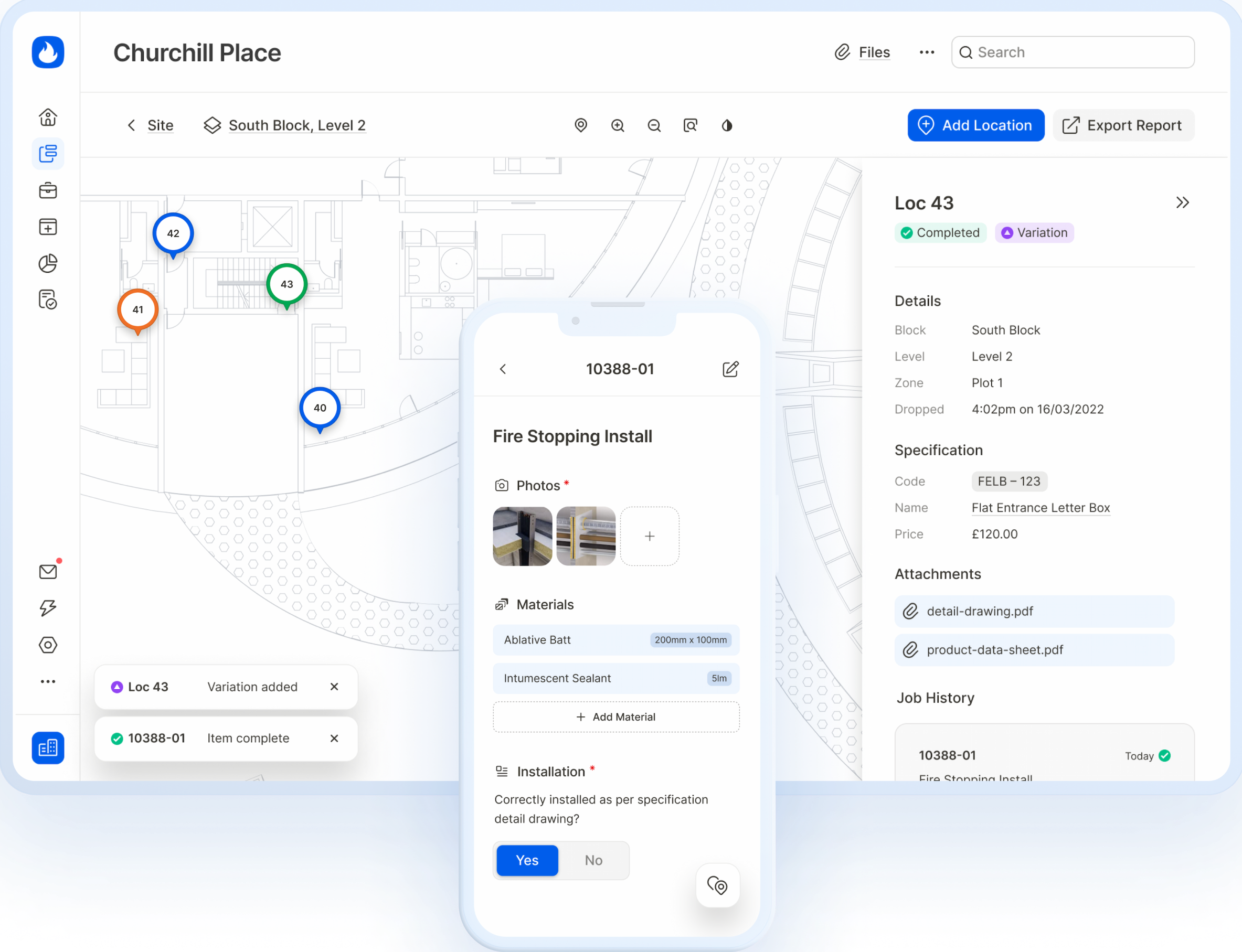
    Onetrace is a powerful cloud-based application that is supporting Ark Fire Protection to raise standards across the fire protection industry.


    Providing Ark with one system to capture, monitor, review and report on all fire protection work being conducted in real time.

    Get in touch

    Residential Fire Stopping Regulations

    According to Approved Document B, Volume 1 (Dwellings) under the Building Regulations 2010, residential buildings must prevent the spread of fire while also meeting other requirements. For buildings of 18 metres or more, the Building Safety Act 2022 also applies:


    • Fire compartmentation between individual dwellings must be maintained to prevent fire and smoke spread between units
    • Flat entrance and common area fire doors must meet FD30S standards, be self-closing and be subject to a regular inspection and maintenance regime
    • Service penetrations through party walls and floors must be fire stopped using certified systems to maintain compartment integrity
    • For higher-risk residential buildings, a Building Safety Case must be maintained and a Building Safety Manager appointed in line with the Building Safety Act 2022


    The documents and their amendments detail the proper procedures for implementing fire stopping measures. Our team of experts is ready to offer valuable assistance throughout this process, ensuring the utmost protection for residents.

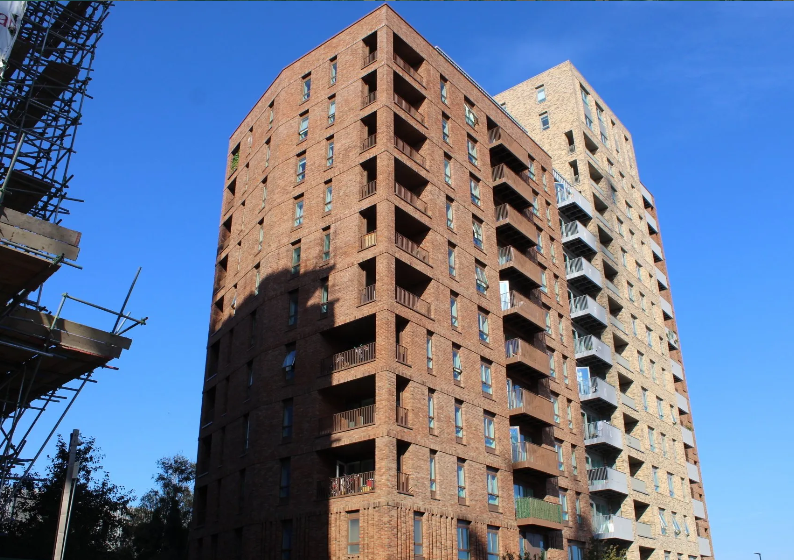
    image w text bg Residential tower block at the Clarendon Road regeneration site, London N8

    What Is Passive Fire Protection in Residential Buildings and Why Is It Needed?

    Passive fire protection in residential buildings refers to fire-resisting measures built into the fabric of a home or block that limit the spread of fire and smoke, protect escape routes, and maintain structural stability without needing to be activated. These include compartment walls and floors, fire doors, fire stopping around service penetrations, cavity barriers, fire-rated partitions, and fire-resistant coatings.


    People sleep in residential buildings, which makes early fire spread particularly dangerous – occupants may be asleep and unaware, and in flats and apartment blocks they often share escape routes. Passive fire protection contains a fire close to where it starts, protecting the people in neighbouring homes and keeping stairwells and corridors usable. We design, install and maintain it in homes across the UK, with every installation third-party certified through FIRAS and evidenced through OneTrace.

    image w text bg Aerial photo of the city centre of Leicester in the UK showing houses and apartment building on a sunny summers day

    Which Regulations Apply to Passive Fire Protection in Residential Buildings?

    Residential fire safety is shaped by building law and ongoing management duties. New and altered buildings must meet Approved Document B of the Building Regulations, with BS 9991 providing detailed design guidance for residential buildings. Once occupied, the Regulatory Reform (Fire Safety) Order 2005 places duties on the responsible person for the communal areas of multi-occupied blocks.


    The Fire Safety Act 2021 confirmed that these duties extend to a building’s structure, external walls and flat entrance doors. The Fire Safety (England) Regulations 2022 added practical duties such as regular fire door checks, and the Building Safety Act 2022 created a tighter regime for higher-risk residential buildings of at least 18 metres or seven storeys.


    The key regulations affecting passive fire protection in residential buildings are:


    • Approved Document B – fire safety requirements for building work, supported by BS 9991 design guidance.
    • Regulatory Reform (Fire Safety) Order 2005 – ongoing fire safety duties in multi-occupied residential buildings.
    • Fire Safety Act 2021 – extends those duties to structure, external walls and flat entrance doors.
    • Fire Safety (England) Regulations 2022 – fire door checks in common parts and flat entrance doors for buildings above 11 metres.
    • Building Safety Act 2022 – the higher-risk building regime and golden thread of information.


    We install to tested details and document every installation through OneTrace, so the protection meets these requirements and the evidence is there when an inspector or fire risk assessor asks for it.

    image w text bg

    Working With Leading Manufacturers

    Residential Passive Fire Protection FAQs

    What does passive fire protection include in a residential building?

    It includes compartment walls and floors, fire doors (including flat entrance doors), fire stopping around pipes and cables, cavity barriers, fire-rated partitions, and fire-resistant coatings. These work together to contain fire and protect escape routes.

    Is passive fire protection a legal requirement in residential buildings?

    Yes. Approved Document B sets fire safety requirements for new and altered buildings, and the Regulatory Reform (Fire Safety) Order 2005 places ongoing duties on the responsible person in multi-occupied residential buildings. The Fire Safety Act 2021 confirmed these extend to structure, external walls and flat entrance doors.

    Who is responsible for passive fire protection in a block of flats?

    The responsible person – typically the building owner, freeholder or managing agent – is accountable for fire safety in the communal areas under the Regulatory Reform (Fire Safety) Order 2005. Individual leaseholders are usually responsible for fire safety inside their own flat.

    What is compartmentation in a residential building?

    Compartmentation is the division of a building into fire-resisting sections using walls, floors and doors so a fire is contained within one area. In residential blocks, this is what allows a fire in one flat to be held there rather than spreading to others.

    How often should passive fire protection be inspected in residential buildings?

    Passive fire protection should be inspected at least annually. Under the Fire Safety (England) Regulations 2022, responsible persons for buildings above 11 metres must also carry out regular checks of fire doors in common parts and flat entrance doors.

    Can passive fire protection be retrofitted to existing homes?

    Yes. We upgrade or reinstate compartmentation, fire stopping, fire doors and coatings as part of refurbishment or following a fire risk assessment, designed to meet current standards and documented for the building’s records.